
5 Easy OT-Approved Tricks to Build Reading & Writing Readiness for your Preschooler (that fit into real life!)
There’s so much pressure around early reading and writing milestones these days, especially when it comes to “Kindergarten readiness”. But here’s what I want you to know about the preschool years: reading and writing readiness isn’t about drilling letters or printing out worksheets.
It’s about brain and body development. And that happens through play, movement, and everyday routines!
As a pediatric occupational therapist with 15+ years of experience (and a mom of two myself), I’m here to remind you that the best “prep” for early literacy looks a lot more like crawling across the hallway than sitting at a desk. 😉
Here are 5 simple ways to support reading and writing readiness for ages 3-5 that don’t require a fancy curriculum or hours of prep.

1. Crawling
Yep, regular crawling! (Even long after your child learns how to walk). Crawling helps build:
Bilateral coordination (both sides of the body working together)
Core strength and shoulder stability
Crossing midline practice for the brain (an essential pre-writing skill)
👉 Try this: Have your child crawl down the hallway before bath time or bedtime, or pull out a play tunnel and let them crawl through during playtime.
2. Silly Rhyming Games
Playing with rhymes (out loud!) builds something called phonological awareness, one of the strongest predictors of future reading success. Phonological awareness is the ability to recognize, hear, and manipulate sounds of spoken language. An easy way to do this is to say silly rhymes out loud with your child!
👉 Try this: During meals or potty time, take turns coming up with silly rhyming words. Start with a real word (“cat”) and take turns saying nonsense rhymes (“zat,” “blat,” “splat”).
3. Hidden Picture Activities (Where’s Waldo, I spy, etc)
These kinds of games strengthen visual scanning, attention, and eye movement control, all essential for tracking words across a page when your child begins to read. Strengthening the eye muscles in the early years by looking for pictures (not letters or words) helps a lot!
👉 Try this: Use “look and find” books or hidden picture games after meals or as part of a calm-down routine before bed.
4. Coloring on a Vertical Surface
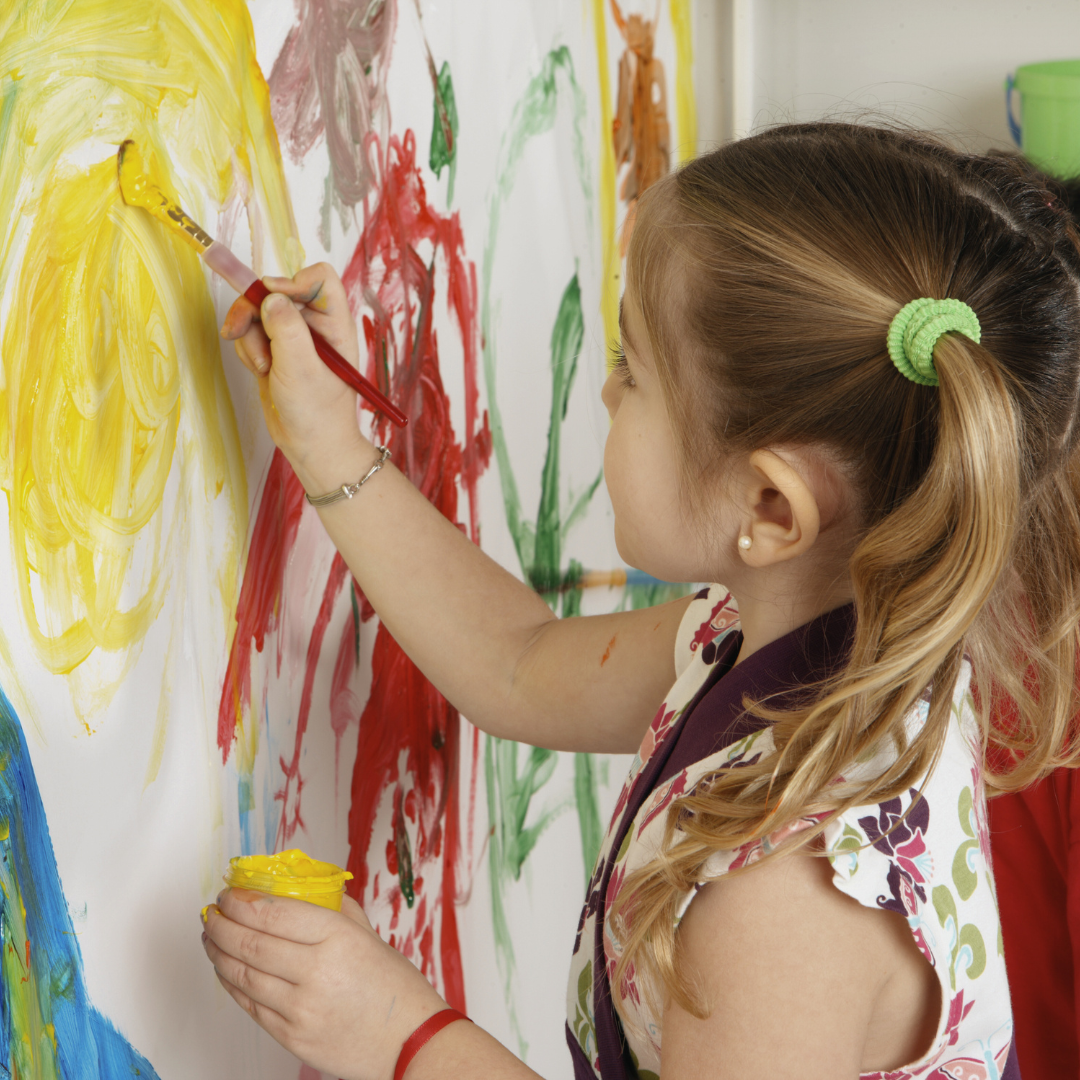
Drawing on a wall, easel, or window helps build shoulder stability, wrist positioning, and hand muscles that directly support handwriting endurance and control. Plus, most kids love it!
👉 Try this: Tape paper to the wall, give them bath crayons to use on the shower wall, or use a standing easel for drawing.
5. Fine Motor Games
Picking up small items with a pincer grasp (thumb and index finger) strengthens the exact muscles used for holding a pencil properly, but without forcing a pencil too early. Any game or activity where your child has to pick things up or take things apart with their fingers is perfect!
👉 Try this: Use tweezers or tongs to pick up pom-poms or small toys. Try games like Sneaky Snacky Squirrel during quiet time or play together after dinner.
The Big Takeaway
Remember, play is not a break from learning at this age – it IS the learning. You don’t need to do structured activities that force flash cards or memorization of letters, I promise. Understanding the basics of how the brain learns these skills through everyday activities is key! And what’s even better is fitting them into your daily routine so it doesn’t feel like any extra work.
I’ve rounded up my favorite go-to OT-approved toys, supplies, and activities to support early literacy and school readiness in my Amazon storefront – click HERE to check it out!
Questions about reading and writing readiness from an OT perspective? Comment below!