
What to Do When Your Child Withholds Their Poop
If your child is holding in their poop, first know that you are NOT alone! Even though this may not be talked about openly, this is a very common issue and I have worked with many children and families who are working through it.
It can be really stressful (and honestly, a little scary) when your child goes days without pooping, asks for a diaper to poop in, or seems fearful when the urge hits.
Here’s the thing I want you to know first: Poop withholding is very common — but it’s not something to just wait out. There ARE things you can do to help support your child gently and effectively.
Let’s walk through why kids withhold, what’s normal and what’s not, and what to focus on next.
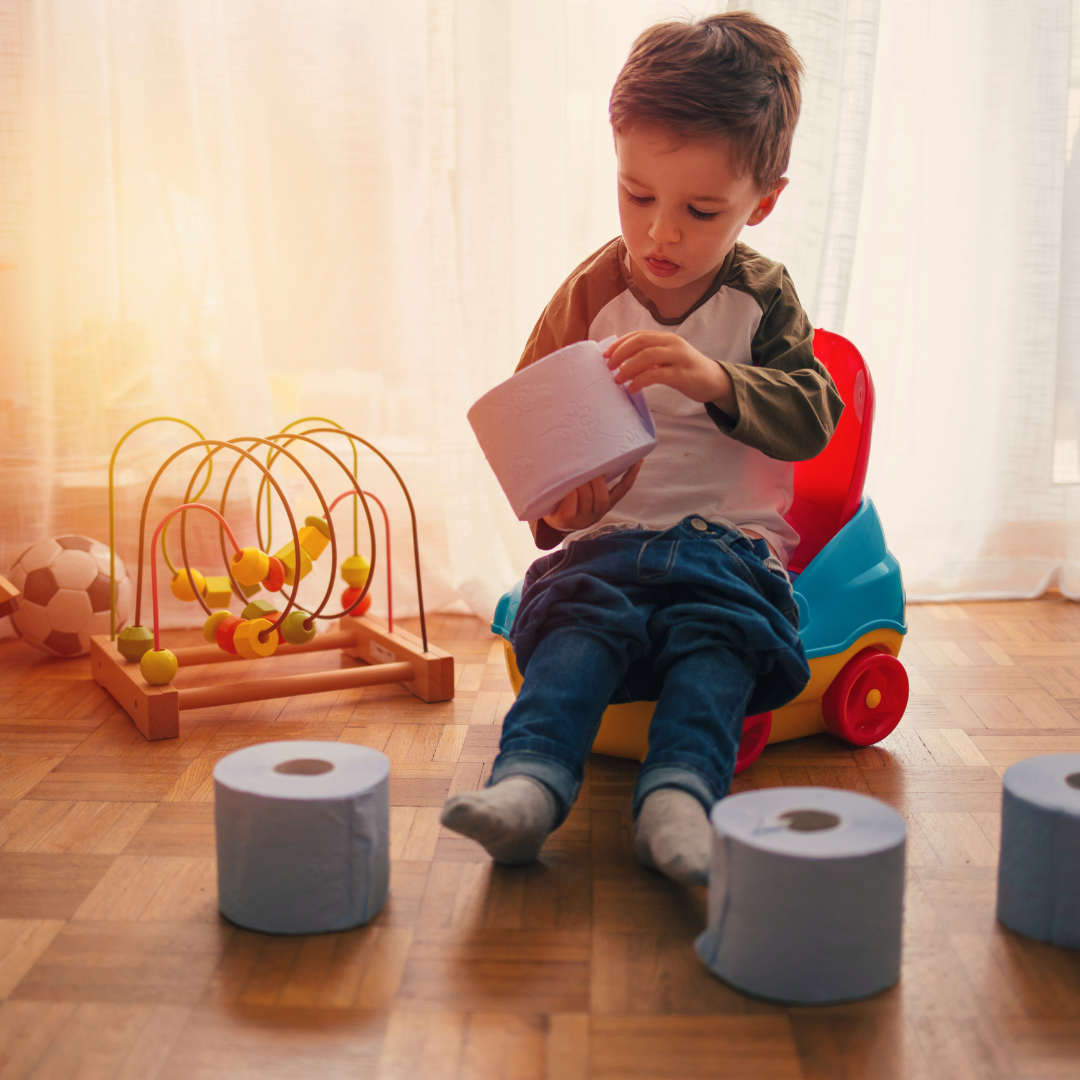
Why do kids withhold their poop?
There are a few common reasons this happens, and usually it’s not just one thing. Here are the most frequent culprits I see:
1. Constipation
This is one of the biggest ones — and often goes unnoticed. If your child had a painful poop even once, they might start to associate pooping with pain. So the next time they feel the urge, they hold it in.
But the longer they hold it, the harder the poop gets. Which makes the next poop more painful. And just like that, you’re in the withholding cycle.
2. Fear or anxiety
The potty can feel scary or unfamiliar, especially for poop. Sitting on a seat with a hole, feeling your body “let it go,” hearing the splash…. it’s all a little weird at first!
Even kids who are peeing on the potty without issue might suddenly freeze up when it comes to poop. This is often a developmental difference in how they understand body sensations and control.
3. Control
Pooping is one of the few things young kids can fully control. So if a child is feeling overwhelmed, overstimulated, or pushed too hard during potty training, they may respond by withholding.
It’s their way of saying: “This is one thing I can be in charge of.”
So what’s normal… and what’s not?
It’s normal for a child to be nervous at first. It’s also normal for some kids to ask for a diaper to poop in, even after they’re otherwise potty trained.
Here’s what’s not normal (and a signal to act sooner rather than later):
Your child frequently goes more than 2-3 days without pooping
Poops are consistently hard, small, or difficult to pass, OR are frequently very loose and large
They’re withholding so intensely that it’s interfering with daily life (they’re scared, hiding, crying, or avoiding the bathroom altogether)
You see skid marks or small poop smears in their underwear (a sign they’re leaking around backed-up poop)
Your child has previously pooped on the potty and now refuses
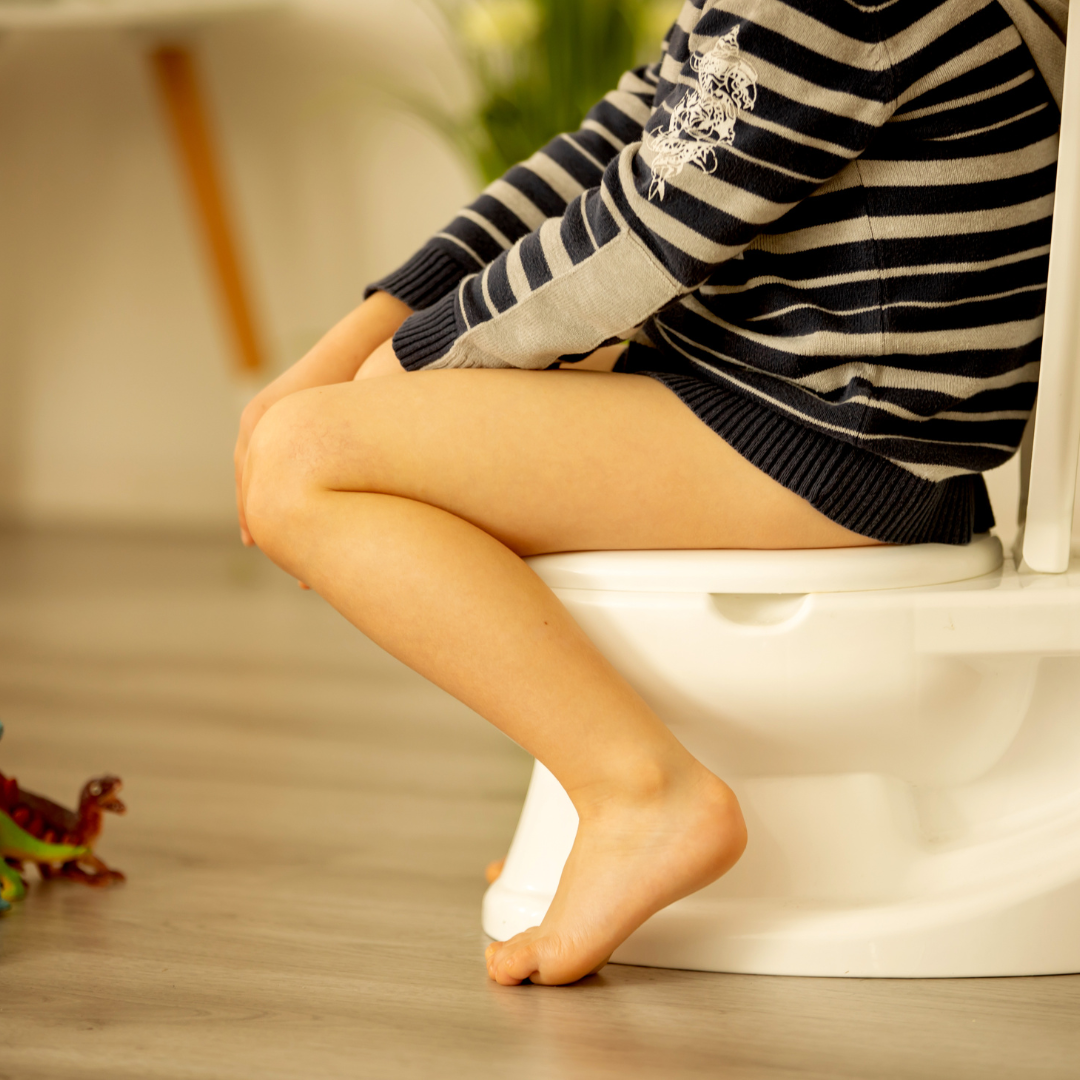
So what can you do?
Here are a few simple (but powerful) steps to gently support your child through poop withholding. These are starting points — if this is a persistent issue, you may need more hands-on support (I offer 1:1 coaching to guide you through this!).
1. Address constipation
This is always step one. Before we can expect our child to poop confidently, we need to make sure pooping feels safe in their body. That means soft, easy-to-pass stools.
Things to try:
Increase hydration with water, fruit, and hydrating snacks
Focus on fats + fiber in meals (avocado, chia seeds, berries, beans, oats)
Keep them moving throughout the day — movement supports digestion!
Talk to your pediatrician about whether supplements or medication could help (if constipation has been ongoing)
Talk to your pediatrician about whether your child may need an abdominal x-ray to rule out any backed-up stool inside the colon (and if so, how to do a “clean-out” regimen)
Constipation can be sneaky, even in kids who seem to poop “regularly.” Trust your gut if something feels off.
2. Normalize poop (don’t make it scary or gross)
How we talk about poop matters. If we say things like “ew, that’s yucky” or “pee-ew, that stinks!” our kids might internalize the idea that poop is bad or shameful.
Instead, try:
“Your body is doing what it’s supposed to do!”
“That was a big poop — nice work listening to your body.”
“It’s so good to let your poop out! It doesn’t want to stay inside”
You can also use books or social stories to help them understand what poop is and why it’s important. (I have a few favorites linked here!)
3. Show them where poop goes
If they’re pooping in a diaper, take the poop and dump it into the toilet with them watching. Narrate what’s happening: “This poop came out of your body, and it goes into the potty.”
This simple step helps connect the dots between their body and the toilet, without any pressure.
4. Create a poop routine (without the pressure)
In order to help your child get into a more regular pooping habit, incorporate a daily “poop-sit” time into your child’s routine. Try to choose a time of day that they normally poop during (even if it’s not super consistent) – after a meal works well because that is typically the time your child will have to go.
Tell them that you’re going to have a chance to try to let their poop out every day at this time.
Don’t build it up to be a big deal. Instead, try these things to help lower the pressure:
Reward them just for sitting (even if nothing happens)
Let them hold a favorite toy or book while sitting
Try putting toilet paper over the water (to minimize noise and splash)
Keep their poop-time relaxed and consistent
You can also give choices like:
“Do you want to try to poop before bath or after? You pick!”
“Do you want to bring your stuffy or your truck to the bathroom with you while you try?”
Giving them a little control helps reduce the power struggle.
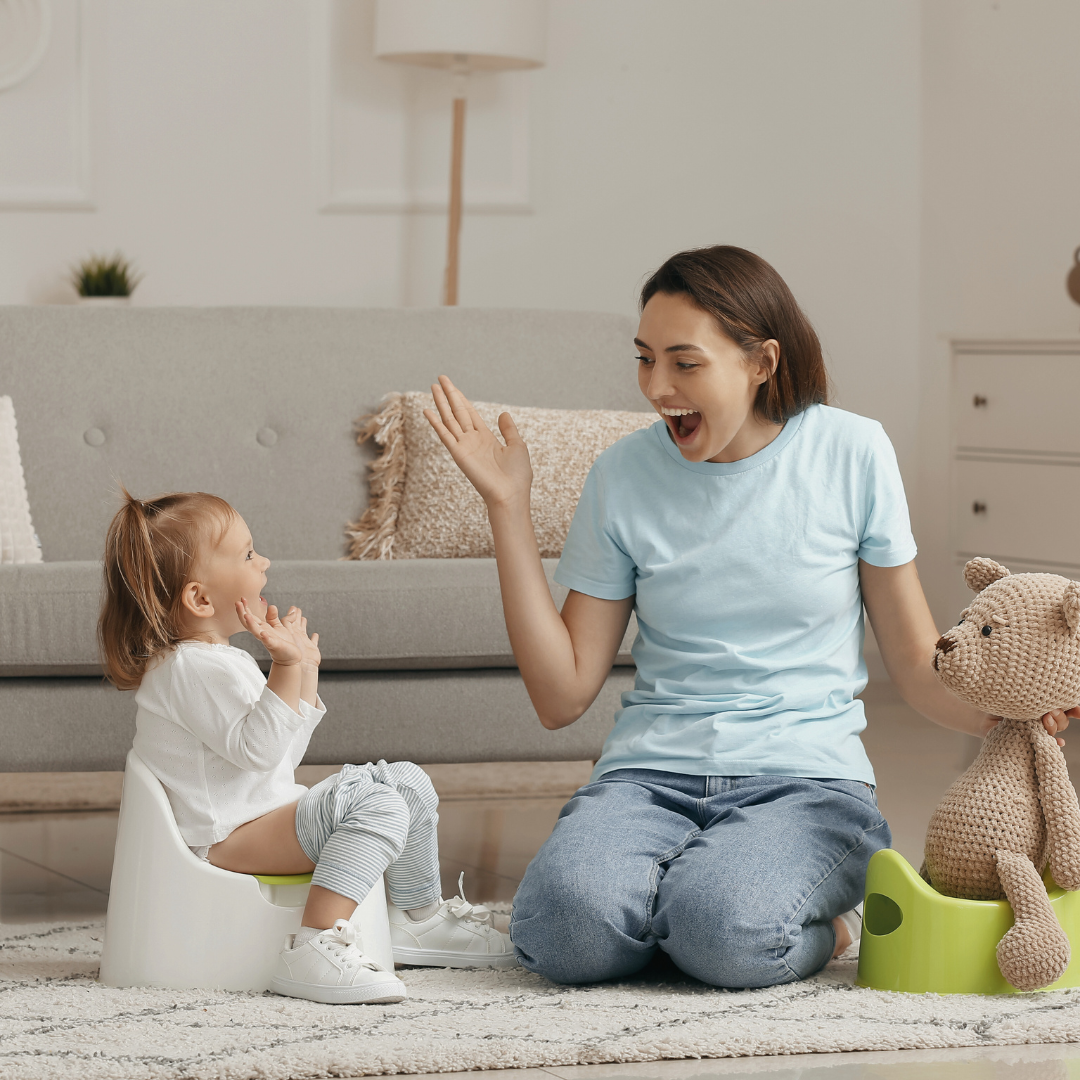
The bottom line
If your child is withholding their poop, it’s not because they’re being defiant or difficult. It’s because something about the experience feels uncomfortable, confusing, or even scary. And it’s our job to help them through it!
Remember, withholding typically doesn’t go away on its own — and the longer it lasts, the trickier it can get. But with the right support, routine, and a little patience, things really can improve.
If you’re navigating poop withholding right now and want more step-by-step support, I offer 1:1 support in this area (the only area I currently take on for private clients!) to really nail down a plan specific to YOUR child. If you’ve been struggling with poop for a while and are desperate for help, check out more information here.
I would love to support you!