
Let’s paint the scene: It's 5:30pm. Dinner is ready after you rushed to get it on the table after a long day of work. You call your child to come to the table and... nothing. (Or worse…a full-on meltdown 🫠)
They don't want to stop playing and come sit down to eat, and suddenly what was supposed to be a nice family meal has turned into a negotiation you didn't sign up for.
If this sounds familiar, you are absolutely not alone! "My kid won't come to the table" is one of the MOST common questions I get asked— and it makes complete sense why. Young children are wired to be on the move, deeply invested in whatever they're doing, and not exactly known for their smooth transitions 😅

But here's the thing: when your child consistently resists coming to the table, it's usually not random. And it’s often not about the food itself! There are a few really common reasons it happens, and most of them are completely fixable with some simple routine adjustments.
I actually got to dig into this topic in depth on the Food for Tot podcast with Kathy O’Brian, a pediatric dietitian and mom who does incredible work helping families feel confident at mealtimes. I'd highly recommend giving it a listen here! (I'll also link it at the end of this post)
In the meantime, here's what I shared on the show, plus a little more detail.
Start here: Is the table a positive place?
Before we get into strategies, I want to ask you something that might be a little uncomfortable: does your child associate the dinner table with pressure?
If mealtimes in your house tend to involve a lot of "take one more bite”, “just try it!”, or overall anxious energy around what they're eating and how much,your child has likely picked up on that. Kids are incredibly perceptive. If the table feels like a place where they're going to be pressured, watched, or stressed, of course they don't want to go there!
So before anything else, the goal is to make the table feel like a positive place to be. That means when you're all sitting together, the conversation should be about almost anything other than what's on the plate. Talk about your day. Tell a silly joke. Let there be comfortable silence. Aim for about 95% of your dinner conversation to have nothing to do with the food in front of them.
This one shift alone can make a significant difference in how willing your child is to show up! 🙏
Next, check their hunger: are they actually hungry at mealtimes?
This is a big one that often gets overlooked. A child who isn't hungry at dinnertime has very little motivation to come to the table, and even less to sit there and eat.
If your child is grazing on snacks throughout the afternoon, or had a snack close to dinner, they may simply not be hungry enough when mealtime rolls around. (And some kids simply eat larger portions for breakfast and lunch and aren’t super hungry in the evening, which can be quite normal as well.)
Predictable, structured snack timing throughout the day helps ensure your child arrives at the table with an actual appetite. That hunger is not something to fear…. it's a built-in signal that makes your job at mealtimes so much easier.
This is core to what I teach about daily routines: when meals and snacks happen predictably, within consistent windows of the day, your child's body learns when to expect food. That rhythm builds hunger at the right times, which helps create motivation to actually come to the table and eat.

Build a simple pre-dinner transition routine
Here's something that makes a huge difference and most parents haven't tried: a consistent pre-dinner routine that signals to your kid that mealtime is coming.
Young children struggle with abrupt transitions because of their brain development. Going from deep play mode straight to "sit at the table right now" is a big ask for a little brain that is fully absorbed in what it's doing. A short transition routine bridges that gap and gives their nervous system a heads-up that a change is coming.
Your pre-dinner routine doesn't need to be complicated. A few simple, consistent steps that happen in the same order every night is all you need. Some ideas:
Set a visual timer a few minutes before dinner and tell your toddler "when this beeps, it's time to say goodbye to your toys and come to the table." A visual timer (I love the Time Timer for this!) shows them exactly how much time they have left, which is much easier for a toddler brain to process than "five more minutes."
Play a transition song. Pick one song that plays every single night as the signal that dinner is starting. Put it on the speaker, and when that song comes on, your toddler's body starts learning: it's time to stop and come eat. You're engaging their sense of hearing as a cue, which is a really lovely, low-pressure way to make the transition feel less jarring.
Create a short pre-table ritual. Say goodbye to the toys, wash hands, maybe say a prayer or something meaningful to your family… whatever it is, keep it consistent! That short sequence of steps becomes a signal to your child's brain that eating time is next. It also creates a little moment of connection before you sit down together.
The candle trick (for older toddlers and preschoolers): Some families light a candle at the dinner table, and the rule is that bodies stay at the table while the flame is lit. When your body is done sitting, you can blow out the candle and that means you can be excused. It's a beautiful visual cue and many families have a lot of success with it (just make sure your child is old enough to understand the concept first!
Check the seating set-up
Check the seating set-up
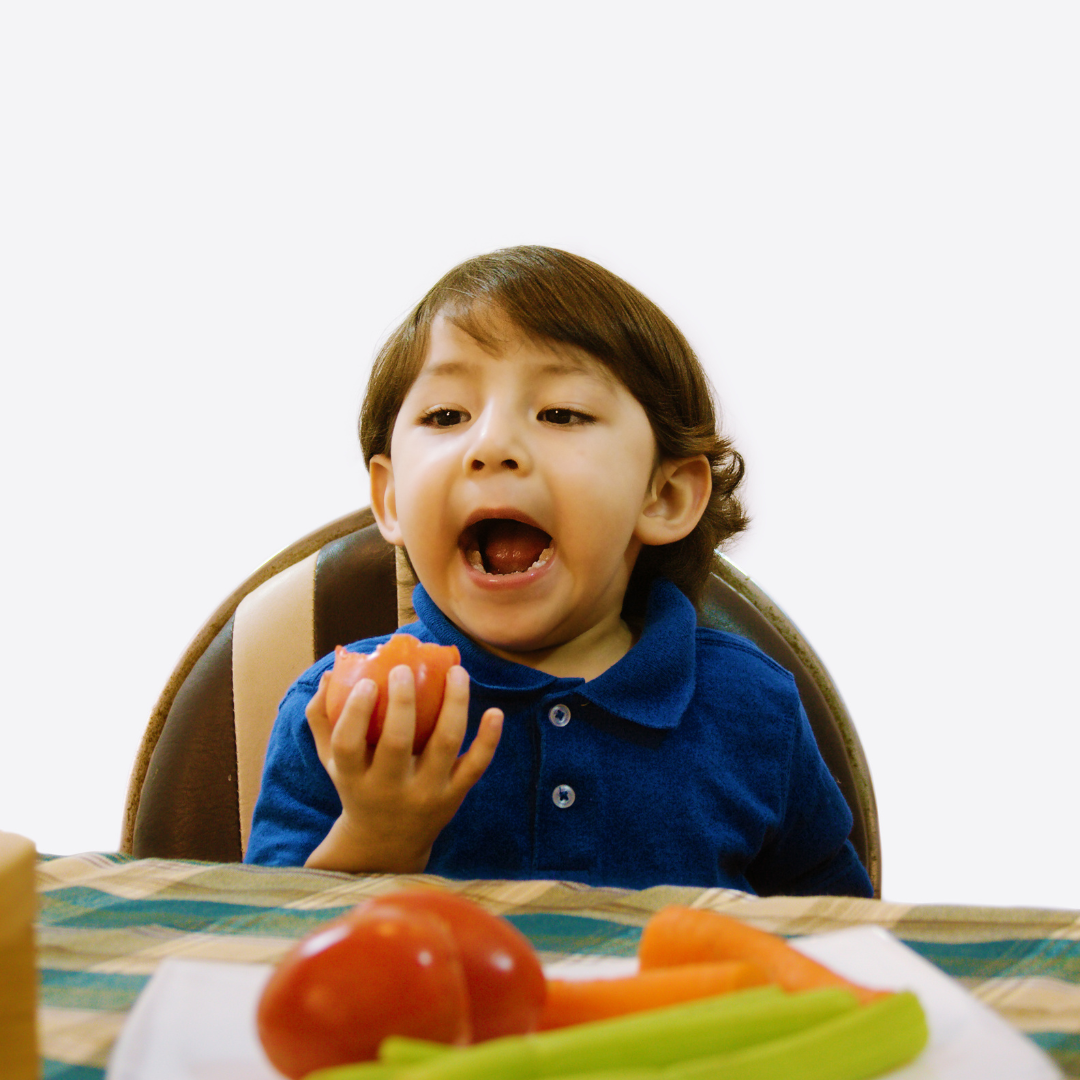
This one surprises a lot of parents, but it's one of the first things I look at when a child is struggling at mealtimes: how is their body positioned at the table?
From an OT perspective, how your child's body feels in their seat is foundational to everything else. If a child doesn't feel physically stable and secure in their chair, their nervous system is going to be working overtime just to keep them upright, which means they have less capacity to sit calmly, engage with their food, and stay at the table.
A few things to check:
Do they have foot support? This is the big one. When little feet are dangling with no support, it's genuinely uncomfortable and it actually affects their ability to stay regulated at the table. Think about the last time you sat on a barstool with your feet dangling. You probably wanted to get down pretty quickly! Our kids feel the same way. Feet should be resting on a footrest or flat surface, not hanging in the air.
Is the table at the right height? Ideally, the table should fall around your child's chest or nipple line, not up at their chin. We want them to have a bird's eye view of their plate so they can actually see, explore, and interact with their food. If they're craning their neck upward just to look at their dinner, that's already working against them.
Are they in the right seat for their body? I see a lot of parents transition their toddler out of a high chair or booster seat way earlier than necessary. A two-year-old sitting in a standard adult dining chair is not set up for success — they're too small, their feet are dangling, and the table height is all wrong. We want a 90-degree angle at the hips, knees, and ankles when they're seated. Many kids benefit from staying in a supportive seat much longer than parents expect!
One product I recommend frequently for mealtime seating is the Stokke Tripp Trapp chair — it grows with your child and allows you to adjust both the seat height and the footrest so that proper positioning is maintained over the years. My boys still sit in theirs (even my 5.5 year-old)! It's an investment upfront but it truly lasts. (For positioning basics on why this matters so much, you can also peek at my baby registry post where I get into high chair specifics.)
A note on consistency
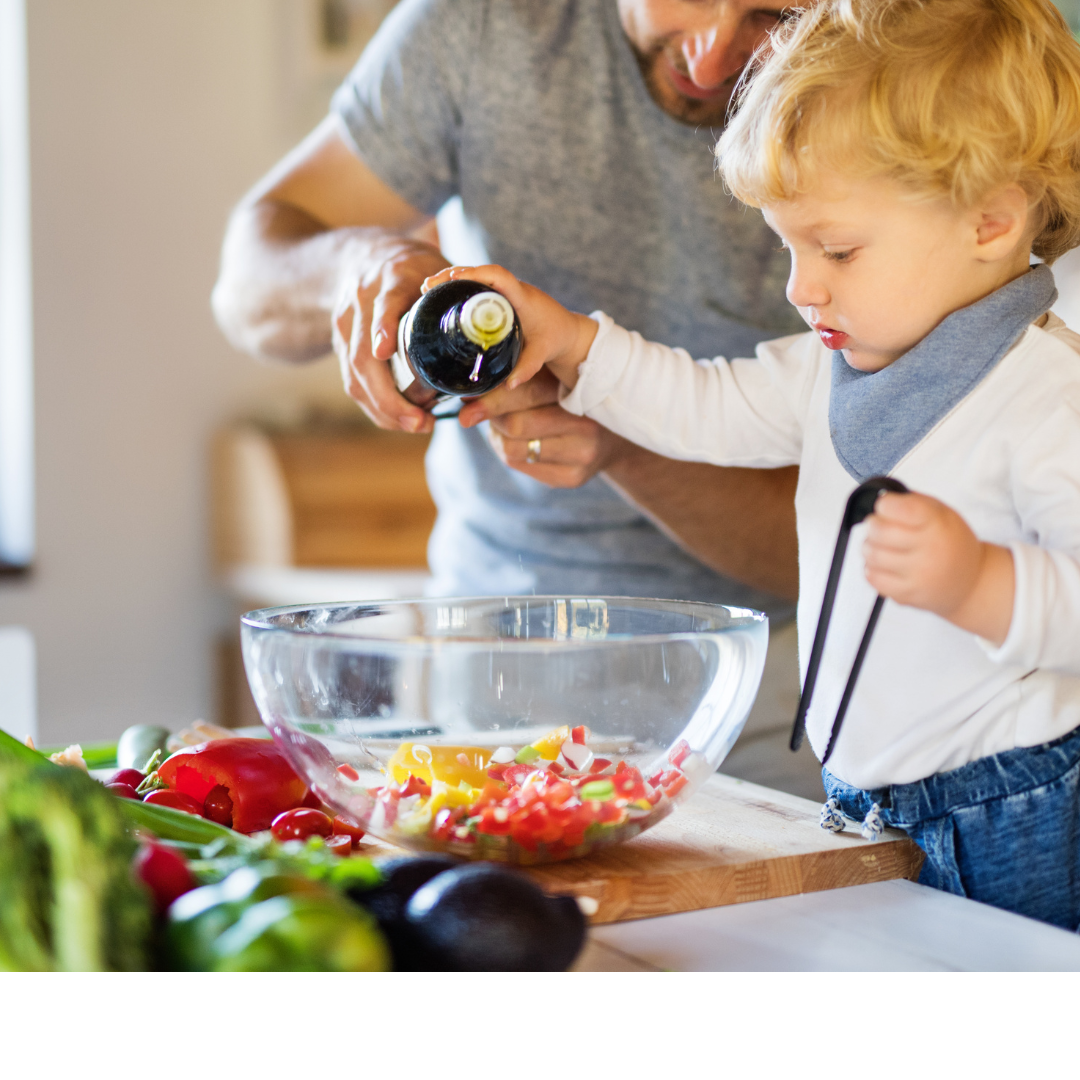
All of the above only works if it's consistent. One timer warning one night and none the next, or a transition song that appears occasionally isn’t going to build the predictability your child needs to feel safe and know what to expect.
The magic of routines is in the repetition. Your child’s brain is learning to predict what comes next. The more reliably you follow the same sequence, the more their nervous system can relax into it, and the less resistance you'll get over time. A win-win!
It won't be perfect overnight. That's okay! Progress over perfection, always. But if you pick one or two things from this post and do them consistently for a few weeks, I promise you'll start to see a shift 🙌
The bottom line
Getting your kid to come to the dinner table without a battle is less about finding the magic trick and more about building the right conditions. A low-pressure table atmosphere, predictable hunger, a consistent transition routine, and supportive seating all work together to make the table feel like a place your kid actually wants to be.
Want to go even deeper on toddler mealtimes? Download my free Toddler Mealtime Guide — it's packed with practical tips for making mealtimes calmer and more connected.
And if you haven't listened to my episode on the Food for Tot podcast yet, go check it out! Kathy and I covered so much ground, from sensory aversions to food throwing to why messy eating is actually a good sign. You can listen to it here.
Questions about mealtimes? Drop them in the comments below — I read and respond to every single one!