
Why tv is better than a tablet
Let’s talk about the elephant in the room…. toddler screen time!
As a mom of two young kids, there have been plenty of mornings in our house where the easiest thing in the world would have been to hand one of my boys a tablet and just... not deal with it. I get it. You're tired. You have stuff to do. The whining is a lot. Screens work, and they work fast, and sometimes survival mode is real.
But here's what I know, both as a pediatric occupational therapist and as a mom of two boys who watches this stuff play out in real time: the screen time conversation most parents are having is focused on the wrong thing.
Everyone is counting minutes. Almost nobody is talking about what kind of screen their child is watching. And that distinction matters SO much more than you might think.
So that's what we're going to talk about in this blog post!
First, a little context on where I stand
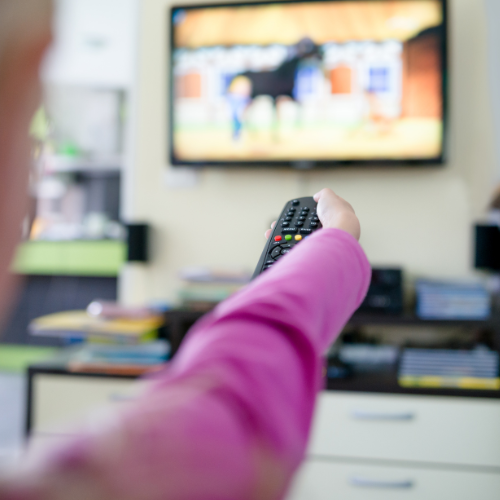
I am not a screen-free household. I want to be really upfront about that! But while we’re not 100% screen-free, we ARE intentional about when, what, and how our kids watch. In our house, that looks like predictable shows at largely consistent times, always on a TV. No tablets at home as a regular thing, no YouTube independently, and no handing over the phone to get through a long car ride or a meal out at a restaurant.
This is what I call a screen-damp approach: not 100% screen-free, but not screen-frequent either. It's a middle ground that supports your child's development while also being realistic about the fact that life happens, and raising kids in modern-day households without multiple adults around at all times IS hard. If you want the full breakdown of how to actually build that kind of routine in your home (including timing recommendations, how to handle the meltdowns when screens turn off, and what shows I actually recommend) I wrote a whole post on it right here. Start there if you're newer to this conversation!
But today I want to zoom in on one specific thing: when your child does watch a screen, a TV is a significantly better choice than a tablet or phone. Because this is the piece most parents don't know about… and once you hear it, you can't unknow it!
The question isn't just "how much"... it's "what kind"
Most screen time guidelines focus on time limits. And yes, how long your child watches matters. Nobody is recommending that your child watch hours and hours of tv every day!
However, as a pediatric OT, what I've come to believe from both the research AND from working with hundreds of families in real life, inside their homes, is this: the type of deviceyour child watches can impact their development way more than the total number of minutes they spend watching.
This impacts attention span, emotional regulation, how smoothly transitions go, and even their eye health (and so much more!)
When you look at it through those lenses, TV and tablets are not even close to the same thing.
6 reasons TV is better than a tablet for toddlers
Tablets lead to eye strain.
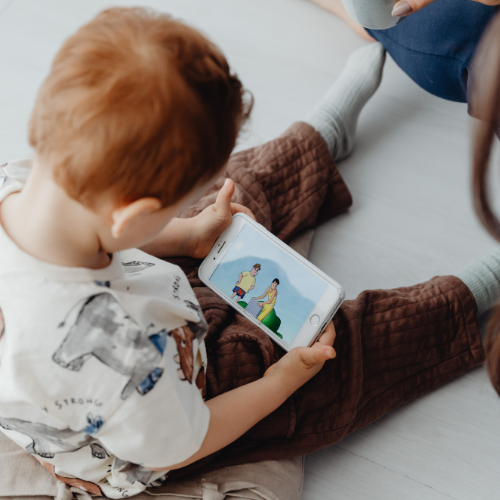
Tablets and phones are usually held just inches from your child's face. That means more visual input, more movement to track, and more strain on their still-developing eye muscles. Watching from across the room on a TV gives their brain and eyes so much more room to breathe. So if you've ever Googled "is screen time bad for my toddler's eyes" – the honest answer is that close-up handheld devices are a much bigger concern than a TV across the room.
2. Tablets can shorten attention spans.
Handheld devices are basically designed for constant tapping, scrolling, and switching. That kind of rapid-fire stimulation conditions a child's brain to expect quick changes and, as a result, to get bored faster with anything that moves more slowly. Over time, that makes it genuinely harder for toddlers to sit through slower-paced things. Things like story time, waiting at a restaurant, playing independently, listening to their preschool teacher. These are completely normal parts of everyday life, and a brain trained on tablet speed is conditioned to struggle with all of them 😬
3. Tablets are harder to turn off.
When a child is holding a screen, it physically feels like it belongs to them. That sense of ownership makes the transition away from it feel like a loss of control, which is often exactly why tablet turn-off time goes so sideways. Watching on a TV feels more communal, more shared, and less personal to them. The TV belongs to the family. The tablet feels like theirs. That difference is small but it is REAL when it comes to managing transitions away from screen time.
4. Tablets can lead to worse behavior after use.
A lot of parents notice their child seems more dysregulated after tablet time specifically, including more meltdowns, more emotional sensitivity, and a harder time getting back into the flow of the day. It's not just what they're watching. It's how close, how fast, and how immersive the experience is. More stimulation means a bigger crash on the way out. If you've noticed this pattern in your child, you are not imagining it. So many parents report this, and it makes complete sense from a sensory and regulation standpoint.
(PS. Research isn’t quite there to prove this, so this is largely anecdotal. I encourage you to observe YOUR child and see how they act after tablet use, and use that to shape your future decisions).
5. You have less control when your child watches a tablet.
With a TV, you know exactly what's playing, when it starts, and when it stops. With a tablet, even the most thorough parental controls can't fully prevent surprise ads, autoplay rabbit holes, or overstimulating content jumping in out of nowhere. You just have more oversight with a TV. This leads to more predictability, and predictability is everything when we're talking about routines and regulation.
6. TV-only reduces how often your kid asks for your phone.
This one is practical and a little underrated! When handheld devices aren't a regular part of your child's routine, they stop expecting them. Kids don't ask for what they don't know to expect. That means fewer daily negotiations, fewer "just five more minutes!!!" battles, and a lot less of your child grabbing at your phone every time it's in reach. Keeping screens consolidated to the TV consistently is honestly one of the simplest ways to reduce screen-related friction in your day. And if I’m being honest, it’s just super annoying when your kid is constantly asking to watch a video or play a game on your phone, you know?!
A note on YouTube 🙅♀️
YouTube deserves its own callout here. In my opinion, it should be completely off limits for toddlers to use independently, even with parental controls. Yes, even “Hey Bear Sensory”! I know that one is popular, especially for babies, but the fast-paced, high-contrast visual stimulation those videos offer does not support healthy development in young children. And the bigger issue with YouTube in general is the swiping. That constant video-to-video mechanic is literally training your child's brain to have a shorter attention span. The algorithm is designed to keep adults hooked…. a toddler's developing brain doesn't stand a chance against it!
(I am not talking about streaming full episodes of shows on YouTube to the tv – that’s okay! I am talking about short, continuous swiping that your child has independent access to)
What this looks like in practice
Here are a few simple guidelines that make the TV-over-tablet approach actually work in real life:
Keep tablets and phones for travel or occasional situations where a TV genuinely isn't an option. They're not off the table forever, but they shouldn’t be a part of your regular routine at home.
Be consistent about when screens happen. The more predictable the routine, the fewer battles you'll have. Kids relax when they know what to expect. It’s okay to have them watch a 20-minute show every night while you cook dinner! This is actually much-preferable than letting them watch sometimes and not others.
Give a heads-up before turning it off. Something like "one more minute, then it's lunch time" goes a long way for a toddler brain that struggles with abrupt transitions.
Put the tablet (or phone) out of sight. If your toddler is whining for it constantly, remove it from their visual field entirely. Out of sight really does mean out of mind for little ones.
You can say “no” even if you've said “yes before”. You're allowed to change course. The more consistent you are going forward, the less demanding they'll be over time (I promise!)
The bottom line
You don't have to be a totally screen-free family to be an intentional one. You just have to make choices you actually feel good about that align with your values and support your child's development at the same time.
If you haven't already, go check out my post on building a screen-damp lifestyle with your toddler. It's the natural next step after this one and walks you through exactly how to build this into your daily routine!
I say all of this with so much love. Parenting is hard and if you’re reading this, you clearly want what’s best for your child.
If you want support building routines that feel calm and consistent across your whole day (not just around screens), come join us inside The Rooted Crew. Your first week is FREE (!), and it's one of my favorite places on the internet. I'd love to see you there!
Questions about screen time? Drop them in the comments below — I truly read and respond to every single one!