
Your child was doing great using the potty — telling you when they needed to go, rarely having accidents, maybe even pooping consistently in the potty too…... and then out of nowhere, the accidents came back or they stopped telling you in advance (and absolutely refused to try when you suggested it). If wondering what on earth happened, I can explain! Potty training regressions are quite common, and they are almost always temporary.
First, let’s define “regression”. A potty training regression is when a child who was doing well suddenly starts going backwards, like having accidents again, not telling you when they need to go, holding in their pee or poop, or refusing to use the potty.
In most cases it's a completely typical response to something happening in your child's world, and it passes within a few days to a few weeks. Let's talk about why it happens and exactly what to do.
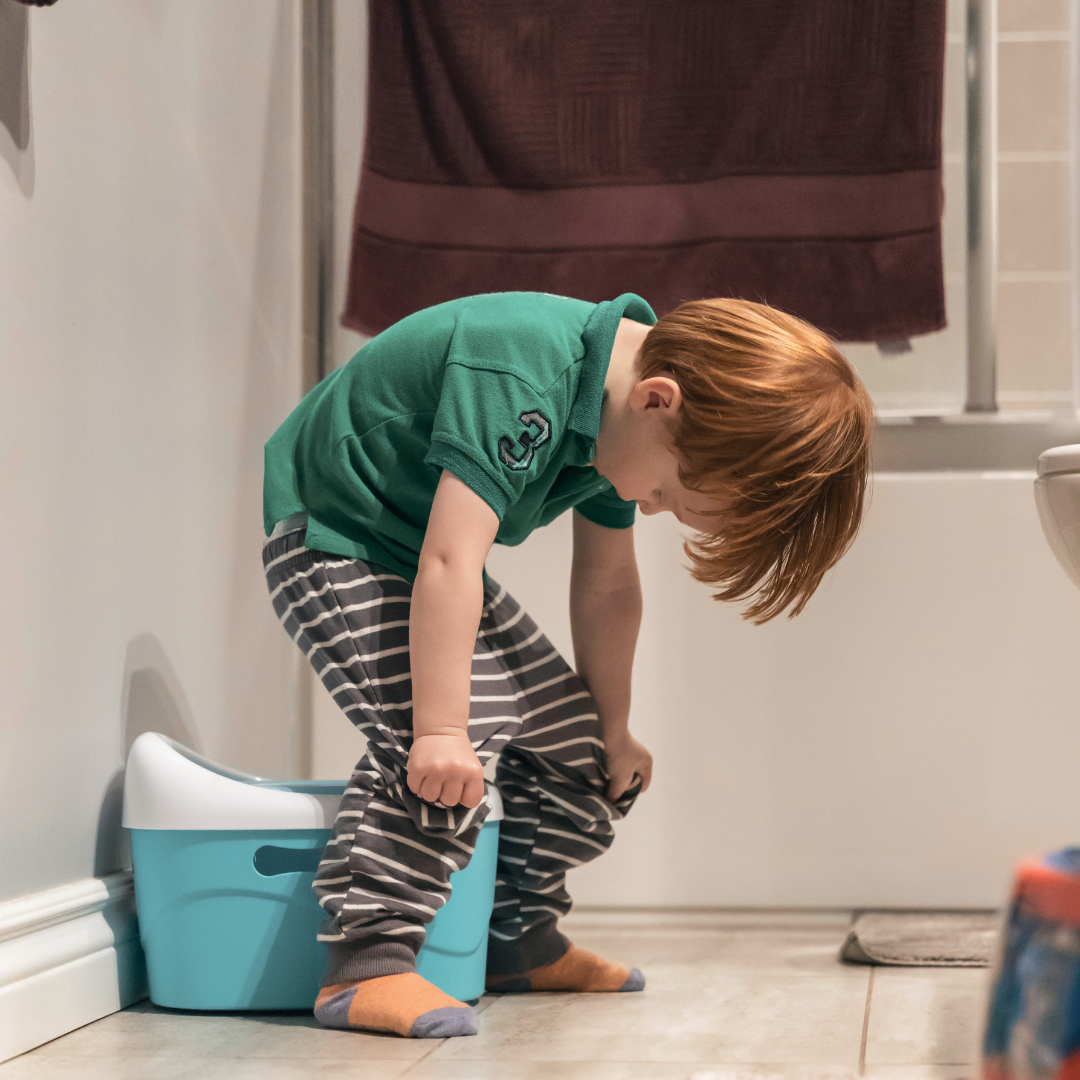
What causes potty training regression?
Regressions almost always have a reason, even when it isn't obvious at first. The most common ones:
A big change or transition. A new sibling, a move, starting daycare or preschool, a new caregiver, travel, or even the holidays. When a lot of a toddler's world shifts at once, potty skills are often the first thing to shift too. A new baby in particular is a classic trigger!
Stress or a schedule that got disrupted. Potty learning goes most smoothly in a predictable environment. When the routine gets thrown off, accidents tend to increase.
They got distracted or waited too long. Especially during busy or exciting seasons, kids get so absorbed in play that they miss the signal until it's too late. This can be a skill they need to re-learn and practice.
Something physical. Constipation is a sneaky and very common culprit, and so are urinary tract infections. If regression comes on suddenly with no obvious life change (or with pain, straining, or lots of tiny accidents in their underwear), it's worth a visit to your pediatrician to rule out a physical cause first.
What to DO about potty training regression
Here's the reassuring part: you don't need a whole new potty training plan. You need to lower the pressure, find the "why," and lean back into predictability.
Rule out anything physical first. Before you treat it as a behavior thing, make sure it isn't constipation or a UTI, especially if it came out of nowhere.
Look for the change. Nine times out of ten, something shifted. Think about what change(s) your child may have recently gone through, like a new baby, travel, starting a new school, moving, etc. This helps you respond with patience instead of frustration.
Go back to basics. Try incorporating regular scheduled potty-sits (after waking, before leaving the house, before bed, etc), and a calm, predictable rhythm around bathroom time. This is typically temporary while they re-learn to be aware of their internal body signals again.
Keep your reaction neutral. When your child has an accident, keep it matter-of-fact. Help clean them up and remind them what to do differently next time. Your child can feel your stress, and strong reactions tend to make regression last longer.
Rebuild the routine. If an increase in accidents can be tied to a disrupted schedule, try your best to simply return to your regular predictable routine across sleep and meals.
Give it a little time. Most regressions resolve within days to a few weeks once the trigger passes and the pressure comes down.
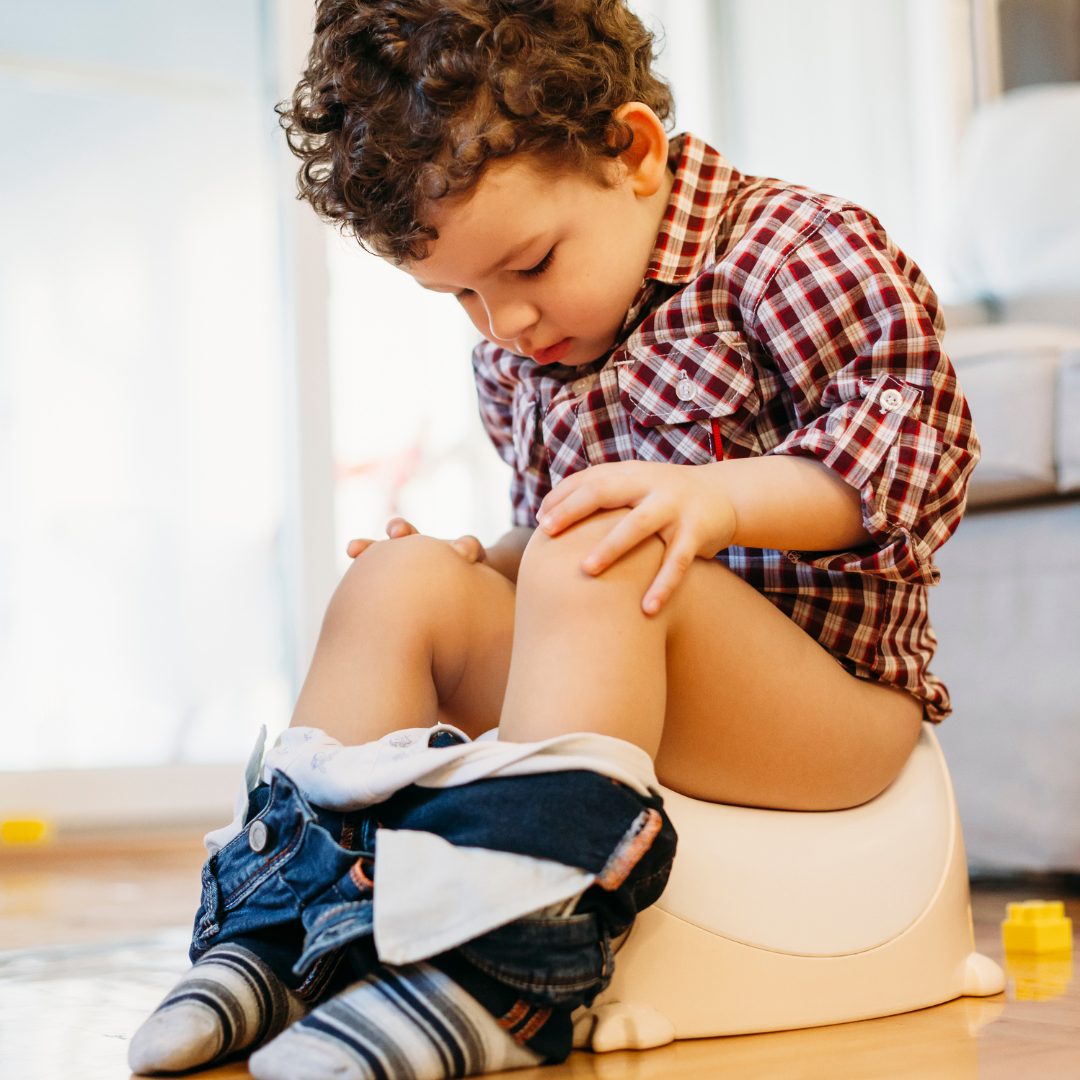
FAQs about regressions
Is potty training regression normal? Yes, very. The potty learning process is not usually linear! It's an expected part of the process for many kids and usually resolves within a few days to a few weeks, especially when there's been a change like a new sibling, illness, or travel.
Why is my potty trained toddler suddenly having accidents? The most common reasons are a life change, a disrupted routine, distraction, or a physical cause like constipation or a UTI. Look for what recently shifted, and rule out anything physical if it came on suddenly.
Should I put my child back in diapers? Usually no! Jumping back to diapers can send a confusing message. Go back to low-pressure basics instead. (Nighttime is its own thing — here's what's normal overnight.)
How long will a potty regression last? For most children, a few days to a few weeks. If it lasts longer or comes with pain, talk to your pediatrician.
If you’re going through a potty training regression right now, you’re not alone! It doesn't mean you did anything wrong, and it doesn't mean they weren't ready. If you want a calm, routines-based path to get back on track, come check out the Rooted Potty Method. I’ll be with you every step of the way!