
The Truth About 3-Day Potty Training No One Talks About
If you’ve googled “how to potty train my kid in 3 days”, you’re not alone. Most of us toddler parents have!!
Then let’s say you went all in: you cleared your schedule for the weekend, bought the little potty or toilet seat, stocked up on treats, you name it. You were ready!
Then day four arrived, and your toddler was still having accidents, refusing the potty entirely, or holding their poop for days on end (or worse, all three!). And you’re wondering how the heck you’re supposed to send them back to daycare (or even leave your house) and what could have possibly gone wrong.
Here's what I want you to know: nothing went wrong. Your child, and you, didn’t fail. The 3-day method just doesn’t tell the whole story 💙
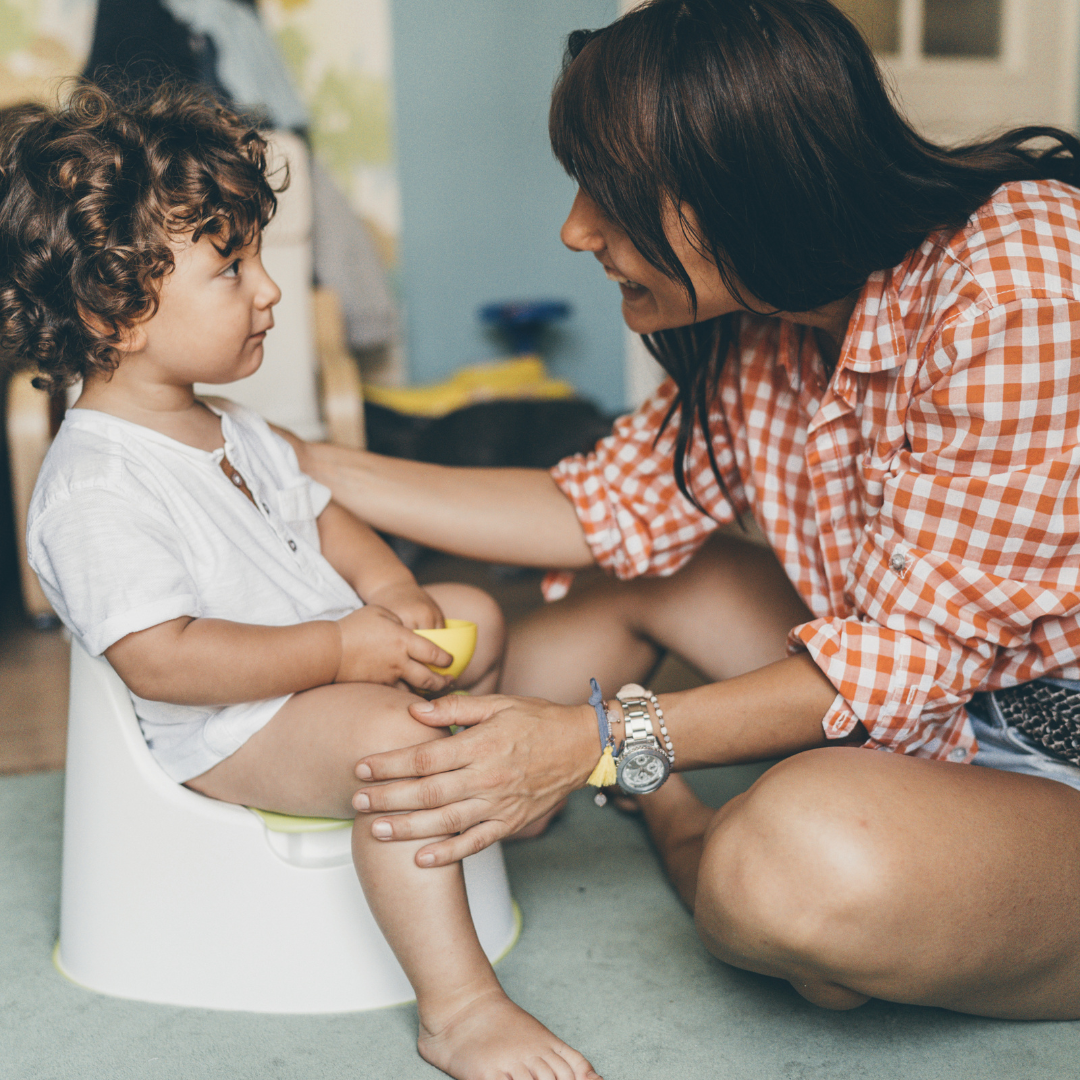
The 3-day method isn't lying, exactly…. it's just incomplete
Let me be clear: I'm not here to throw any specific program under the bus. Some children do make significant progress in a short intensive window, and that's wonderful! Early potty prep, a child who was truly ready, and a parent who was consistent are all things that can help lead to fast progress in a few short days.
But here's what those programs almost never talk about: what happens AFTER those three days.
The regressions, the resistance, the accidents, and more. The constant stress and nervous system overload for both of you. The moments where you're standing in the bathroom at 6pm on a Tuesday wondering: "wait, is this even working?"
THAT is the part of potty training most parents are completely unprepared for. And that gap between "the method says we should be done" and "my child is clearly NOT done" is exactly where the shame, the self-doubt, and the panic set in.
But I’m here to tell you that it doesn't have to be that way! 🙏
The truth: most children take longer than three days
I'll just say it plainly: it is completely NORMAL for potty training to take longer than three days. Most children require consistency and repetition over a longer period of time to fully get there, and if you see any program claiming to potty train your child in three days guaranteed, I'd let that be a red flag 🚩
Potty training is a complex developmental skill. Think about it: we're asking a child who has spent their entire life peeing and pooping in a diaper, to suddenly become aware of their body signals, hold it long enough to get to the potty, pull down their pants, sit down, release on command, and then communicate all of that before it happens. That's a LOT of steps! And a lot of new skills layered on top of each other.
And here's the thing that no one talks about enough: you cannot make a child pee or poop. You simply cannot. What you can control is the environment, the language, the routine, and your response. But the actual act of going? That's your child's job. Some kids' bodies need more time and more repetition to get there. That's not failure. That's just how development works.

Why the "one weekend" framing sets parents up to struggle
When we frame potty training as a one-weekend event, a few things happen that actually make the process harder:
It creates a false finish line. When day four comes and your child is still having accidents, you think something is broken, when really, you're just in the messy middle of a NORMAL learning curve. The expectation was the problem, not the progress.
It doesn't account for prep work. Children who potty train most smoothly have usually had significant exposure to the potty, bathroom routines, and body language before the "official" start. Reading potty books, sitting on the potty before bath time, talking about what pee and poop are — all of that matters enormously. You can't skip straight to the weekend and expect the same result.
It skips the troubleshooting. What do you do when your toddler is holding their poop? What about when they're great at home but falling apart at daycare? What if they had it down for two weeks and now suddenly they don't? These are the questions that come up in week two, week three, week four — and a three-day program has no answer for them.
It underestimates the nervous system piece. Potty training isn't just behavioral — it's physiological. A child's body has to learn to recognize and respond to new internal signals. That takes repetition, time, and a low-pressure environment. Rushing the process or reacting with stress and anxiety when accidents happen can actually slow things down, because a dysregulated nervous system doesn't learn well.
What actually works: consistency over time
Here's my honest take after working with hundreds of families through the potty training process, start to finish: the families who have the smoothest experiences are the ones who:
✅ Prepared in advance. They introduced their child to the potty, the bathroom, and the concept of body awareness before ever saying goodbye to diapers. They read books, normalized the process, and let their child sit on the potty with zero pressure long before the "official" start.
✅ Started when both child AND parent were ready. Readiness signs in your child matter — things like showing awareness of a wet diaper, hiding to pee or poop, showing interest in the bathroom, and being able to follow simple directions. But YOUR readiness matters just as much. You have to feel ready to be consistent, calm, and committed, because your energy sets the tone for the entire experience!
✅ Knew what to expect. The parents who weren't caught off guard by accidents, regressions, poop holding, or a "great day followed by a terrible day" pattern were the ones who stayed calm and kept going. Knowing that these things are NORMAL (not signs that something is wrong) is what keeps you in the game.
✅ Had a plan for the hard moments. Not just a plan for day one, but a plan for week two. For the daycare transition. For traveling. For when they're doing great and then suddenly they're not. Those are the moments that determine how smoothly potty training ultimately goes, and they almost always happen outside the three-day window.
✅ Stayed low pressure. The potty has to feel like a safe place. The more pressure, urgency, or negative energy surrounds potty time, the more your child's nervous system is going to resist.

A note on poop specifically
Poop withholding deserves its own paragraph because it is SO common and SO under-discussed in the potty training conversation. Many children who complete the three-day weekend fine with pee will often hold their poop for a number of days, causing significant discomfort and distress for everyone involved.
This happens for a real reason: releasing a bowel movement requires letting go and trusting the process in a way that is developmentally and neurologically harder for many toddlers. It is not defiance or manipulation, but a nervous system and muscle coordination challenge that often needs more time, more support, and a very calm environment to work through.
If this is happening in your house right now, you are not alone — and it doesn't mean you did anything wrong! It means your child needs more time and support than three days provided.
The bottom line
Three days is a starting point. But it is not the finish line!
Potty training is a process — one that looks different for every child, every family, and every nervous system. Some kids click faster than others. Some need more prep. Some need more time after the initial start. Some hit a wall at week three that no one warned them about. All of that can be normal!
What you need is not a perfect method, but the right support, the right expectations, and a plan that doesn't abandon you when things get hard (because things will get hard, and that is completely okay ♥️).
If you're gearing up for potty training and want real, step-by-step guidance from prep all the way through troubleshooting, I'd love to support you. My Rooted Potty Method program walks you through the full process, not just the first weekend. Learn more HERE! 🧡
Questions about your potty training journey? Drop them in the comments — I read every single one!