
The Truth About Potty Training Accidents (And What to Do About Them)
Let’s set the scene: You're a few days into potty training. Things were going okay, maybe even better than you expected, and then…
Accident on the couch. Accident in the car. Accident approximately four minutes after you just asked if they needed to go and they said no.
You clean it up, take a breath, and pray that that’s it for the day. But the little voice in the back of your head starts asking the thing you're almost afraid to admit out loud: am I doing something wrong? Was s/he just not ready?
You're not, and they probably were ready. And I really mean that 💙
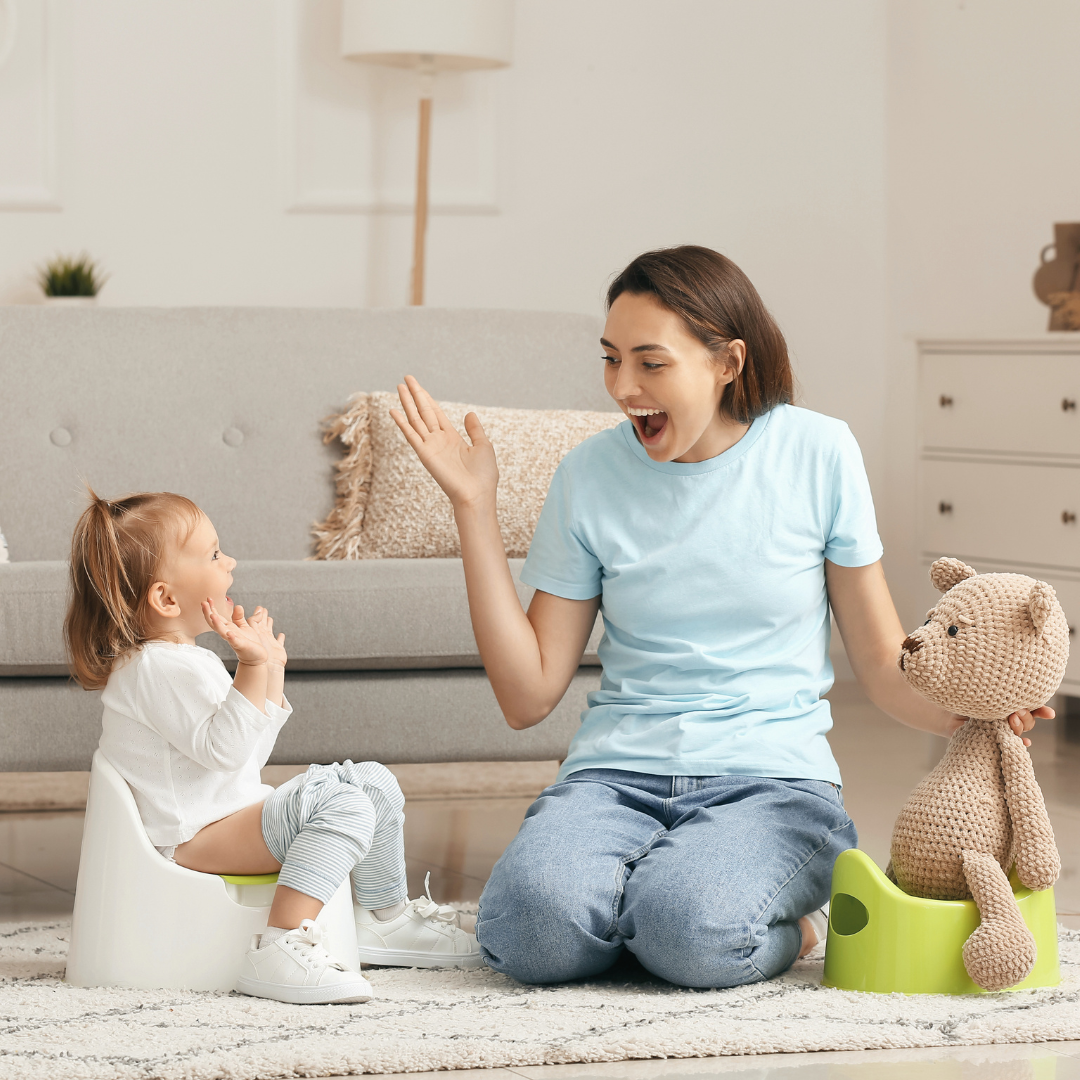
Potty training accidents are normal
Here's something I wish every parent heard before they started potty training: accidents are not failure. They are not a sign your child wasn’t ready or that you are doing something totally wrong. And they are not a sign you should just give up and go back to diapers.
They are a sign that your child is in the middle of learning one of the most complex physical and neurological skills of early childhood — learning to pee and poop in a different place – and that learning takes time!
Think about what we're actually asking your toddler to do. We're asking them to recognize a subtle internal body signal that they’ve never really had to notice before, hold it long enough to get to the bathroom, pull down their pants, sit down, and release on command. That's a lot of steps for a developing brain.
Accidents aren't the exception during potty training. For most children, they're a completely expected part of the process. Most children continue to have occasional accidents for weeks — sometimes months — after potty training begins. That is normal developmental territory, even when it doesn't feel like it, and even when it’s very frustrating as their parent!
So why do accidents actually happen?
Understanding the real reason why your child had an accident makes responding to them so much easier.
They got distracted. Play is genuinely compelling for toddlers. A child who is deep in an activity will often not notice the urge to go until it's too late — not because they're ignoring it, but because their brain is fully absorbed in something else. This is especially common in the first few weeks of training when they're still learning to tune into those body signals at all.
They waited too long. Toddlers are still learning what "I need to go soon" feels like versus "I need to go RIGHT NOW." The window between those two things can be extremely short, and they don't always read it correctly yet. This gets better, but it does take practice and time.
The routine got disrupted. Potty training goes most smoothly in a predictable environment. Travel, a day at someone else's house, an off schedule, a big transition — all of these tend to increase accidents, especially at the beginning.
Poop is its own category entirely. Poop accidents — or poop withholding, which is when a child holds it and won't go at all — are among the most common potty training challenges and are almost always a nervous system and muscle coordination challenge, not a behavioral one. If your child is doing great with pee but struggling with poop, you’re not alone – many kids take longer to poop in the potty successfully! If you’re struggling and want help, I do offer 1:1 poop coaching services - click HERE to learn more.
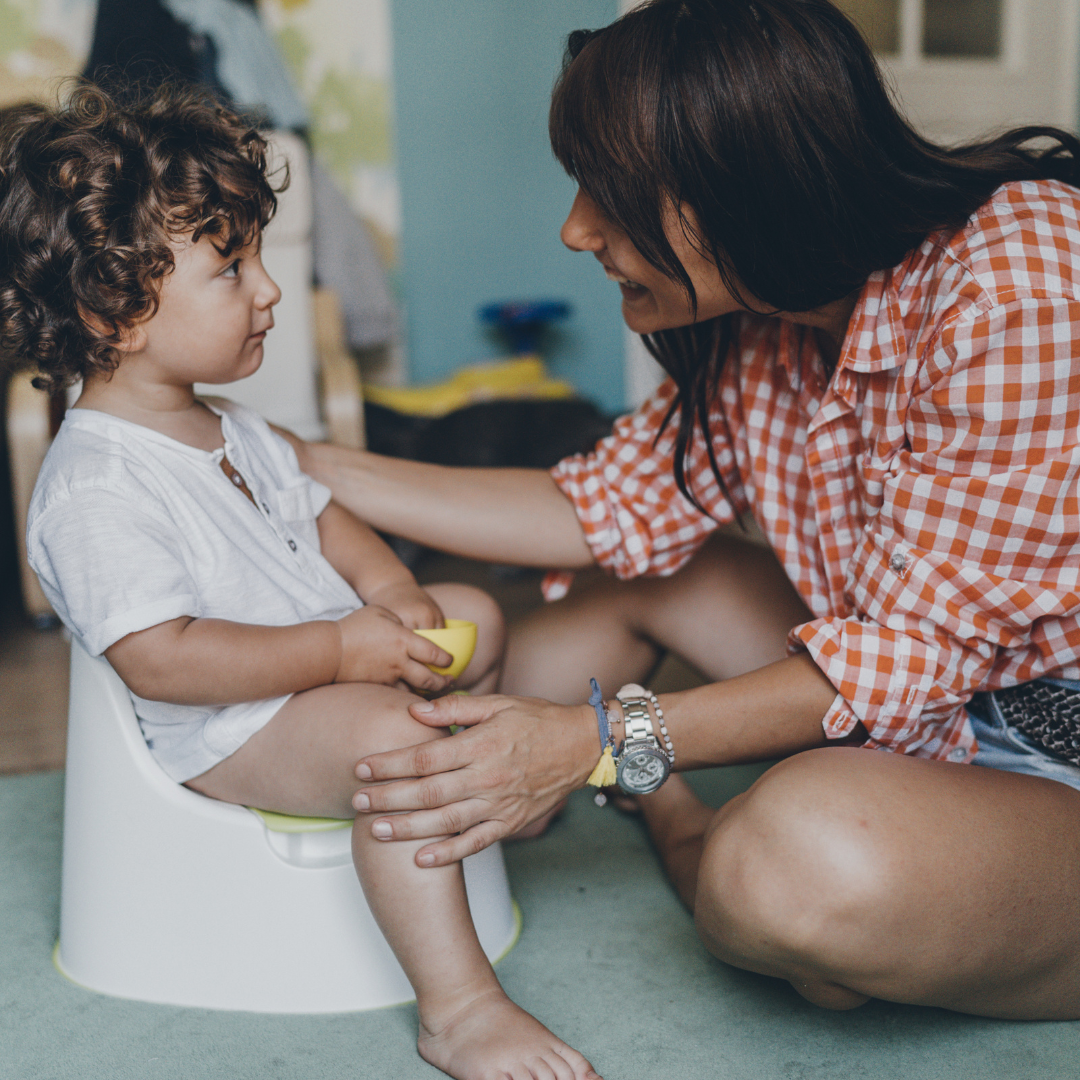
How you respond to the accident matters a lot
This is the part I want you to really sit with, because it's the thing that has the biggest long-term impact on how potty training goes: Your reaction in the moment during/after an accident shapes your child's relationship with the potty (and with their own body).
The goal is to respond calmly and neutrally, not angry or exasperated, and not so dramatically reassuring either that it accidentally becomes its own kind of attention. Just matter-of-fact.
Something like: "Oops, you peed in your pants. Pee goes in the potty. Let's get you cleaned up. Next time you can run to the potty when you feel the pee feeling!"
That's it. Clean it up, tell them what they can do differently next time, and move on.
What you want to avoid (even when you're exhausted and it's the third accident today, which I KNOW is hard!) is communicating that accidents are shameful or that your child has done something wrong. That association is hard to undo and tends to make things significantly harder.
Practical things that actually reduce accidents
Routine potty sits. Especially in the early weeks, don't wait for your child to tell you they need to go every single time. Offer routine potty-sits throughout the day — after waking up, before or after meals, before leaving the house, after nap time, before bed, etc. Building potty time into the routine removes the pressure of having to solely rely on self-initiation, even though that is the eventual goal. A mix of both is important!
Dress them for success. Easy-on, easy-off clothing makes accidents less likely because they can actually get there in time. Dress them in loose-fitting, elastic waistband pants or shorts on the bottom. Nothing with buttons, buckles, zippers, or tight-fitting leggings. Save the cute complicated outfits for when they’re past this stage!
Teach them about the “pee feeling”. Talk about what it feels like in their body to need to pee and role-play through what they should do when they feel the pee feeling – stop, go to the potty, and come back.
Stay consistent. The temptation when accidents are frequent is to put the diaper back on and try again another time. And I understand that impulse completely because nobody wants to be cleaning up accidents all day! But going back and forth between diapers and underwear tends to make potty training take longer overall.
What if accidents seem to be getting worse, not better?
Sometimes, especially around a few days to a few weeks in, accidents actually seem to increase before they improve. This can feel really alarming because you may think: “What happened? They were doing so well!”
What's happening is that the novelty has worn off and the initial motivation has dipped. Your child is now in the harder part of the learning curve where the skill isn't yet automatic. It's not a regression, it’s just the messy middle of learning something new and genuinely difficult.
The answer is almost always: stay the course, keep the routine consistent, reduce any pressure around potty time, and give it more time than the internet told you it would take.
That said — if accidents are happening constantly with no improvement after 4-6 weeks of consistent effort, or if there are signs of real distress or withholding, that's worth getting some extra support for.
You don't have to figure this out alone
Potty training is one of the most stressful toddler milestones — mostly because parents go into it without enough information about what's actually normal, and without a plan for when things get hard.
That's what my Rooted Potty Method program is for. We walk through everything from setting your child up before you start, to handling accidents, poop challenges, daycare transitions, and every potty curveball that shows up along the way. It’s your step-by-step plan and REAL support for the whole process, not just the first weekend.
Click HERE to learn more!
Questions about potty accidents? Drop them in the comments — I read every one!