
Toddler Doctor Visits: What Makes Them Easier (And What Doesn’t)
We’re in the thick of sick season over here…. the kind where someone always has a lingering cough, you’re running low on tissues, and you have the pediatrician’s office saved as a favorite contact. Toddler parents, you know what I’m talking about!
But here’s the thing: taking your toddler to the doctor isn’t necessarily fun. Even for the most easygoing kids, it’s unfamiliar, unpredictable, and sometimes uncomfortable. And for toddlers who thrive on routine and control, it can feel really scary and overwhelming (especially when they’re sick!).
If your kid melts down at their appointment even if you think you’ve done everything “right”, you’re not alone. And if this is you, please know that there are ways to make it smoother (but not perfect!).
As a pediatric OT and a mom of two, I’ve learned a few tips and tricks over the years to help prep them for the visit and make it go a little smoother:

1. Decide intentionally how and when to tell them
One of the biggest mistakes I see parents make is either over-prepping OR avoiding the conversation entirely because they’re nervous about the reaction.
There is no universal “right” timing. Some toddlers do beautifully with advance notice. Others will spiral the second they hear the word “doctor”. However, in general, most kids benefit from some level of prep, even if it’s just the morning-of.
Try a simple, neutral explanation like: “After breakfast, we’re going to see the doctor. She’s going to check your ears and listen to your heart to help keep your body healthy.”
Stay calm and don’t over-explain. If they respond emotionally-charged, repeat it back once or twice but don’t get caught in a power struggle or debate about whether it’s happening and how they should feel about it!
If your child tends to perseverate or build up lots of anxiety when they know something non-preferred is coming, you may choose to tell them when you’re on your way instead. The decision of WHEN to tell them is going to depend on your child’s personality and takes a little bit of trial and error to figure out what works best.
2. Use play and books to normalize the experience
Toddlers process the world through play. When something feels unfamiliar, giving them a way to rehearse it in low-stakes play can dramatically reduce fear.
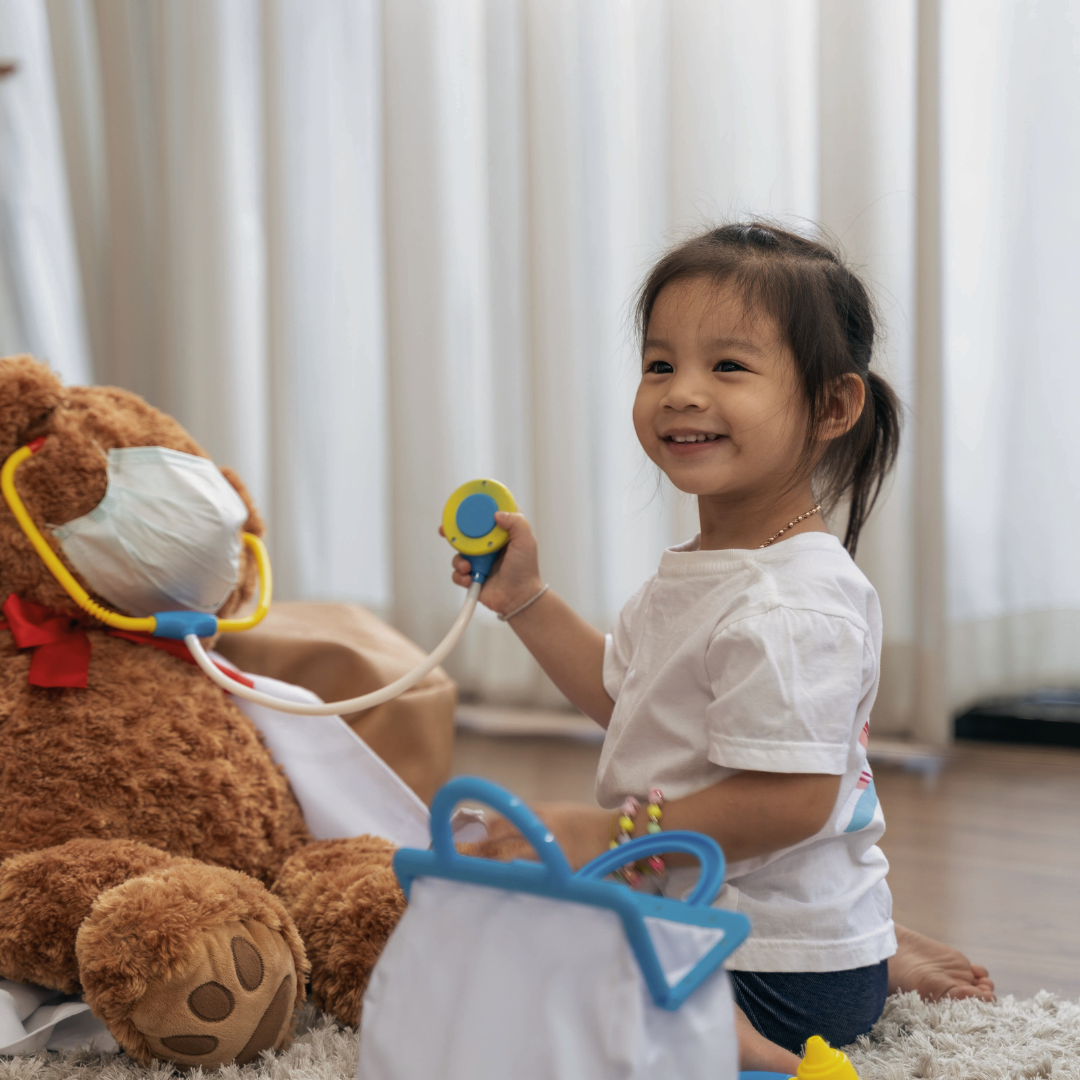
Reading realistic books about doctor visits (I love this one) or using a pretend doctor’s kit (my favorite linked here!) with a stuffed animal allows your child to experience the sequence before it happens.
You might say: “First the doctor listens to teddy’s heart. Then she looks in his ears. Then we’re all done!”
This can be woven into your normal play rotation or read casually the night before – it doesn’t need to be a big prep session!
What this does from a nervous system perspective is build familiarity, which reduces the threat in your toddler’s brain.
3. Be honest (especially about hard things)
This one matters deeply to me! It can be tempting to soften the experience by saying something like “it won’t hurt” when a shot is coming. But toddlers are incredibly attuned to incongruence. When you tell them it won’t hurt and then it does, you erode their trust.
Instead, keep everything honest, neutral, and matter-of-fact. If they ask if they are getting a shot (and if it will hurt) try saying something like: “Yes, you’re getting a shot today. It will feel like a quick pinch and then be over super fast. I’ll be there to keep you safe!”
Notice what’s NOT happening here. There’s no dramatic tone. No “I know, it’s so scary!” No apologizing or over-explaining. And definitely no pretending like it won’t be a big deal.
I find that it’s often our energy that amplifies their fear, so staying calm is key here.
If they express worry, you can validate them, remind them they’re safe with you, and then try to move on.
4. Bring a comfort item
Let your toddler choose what they want to bring with them to the appointment, like a lovey, stuffed animal, or small toy.
The power here isn’t only about the object itself (though many items do provide comfort), but about control. Doctor visits can feel like something happening to them. Allowing them to choose their comfort item restores a bit of agency.
You can say: “Let’s go pick out something to bring with us and help you be brave!” That subtle reframe positions bravery as something they already have and the item just supports it.
5. Don’t underestimate snacks
I am not above strategic snack use 😝 Going to the doctor is hard, and snacks can help. If your provider’s office allows it, bringing a simple, non-messy snack can be a great tool to have in your back pocket (literally).
A highly-preferred, familiar snack helps them feel grounded and safe in a stressful moment and also acts as a simple distraction technique. Plus, the physical act of chewing is organizing and calming to the nervous system, which is an added bonus!
A Few Things That Don’t Help
Over-prepping with intense emotional language.
Threatening consequences if they don’t “behave.”
Lying to them in an attempt to avoid tears.
Rushing through validation because you’re embarrassed about their reaction or behavior.
Remember: tears at the doctor do NOT mean you did something wrong!
What I Want You to Remember
When you approach doctor visits through the lens of regulation and preparation instead of compliance, everything shifts. It becomes less about “getting through it without a scene” and more about helping your child build resilience in manageable doses. This is an important life skill!
And here’s something I see over and over: parents are usually far more anxious about these appointments than their toddlers are 😅 When you have a plan, stay calm, and lead with honesty and predictability, most kids will recover quickly. (Even if they cry during the shot, cling to you the entire time, and say they don’t want to go back!)
If this was helpful, make sure to save it for the next inevitable sick visit. And share it with a toddler parent who could use a steadier approach this sick season! 🤍