
If you've ever spent a cold, grey winter day trapped inside with a toddler who has way too much energy and absolutely nowhere to put it — this blog post is for you.
Between the meltdowns, the climbing-on-everything, the general chaos of a wiggly little human stuck indoors, it can feel like you're just in survival mode from November through March if you live in a cold climate.
And here’s the truth: you’re not imagining it. Your toddler genuinely needs to move, and when going outside isn’t as available, that need doesn't go away. It just gets louder.
The good news: you don't need a fancy indoor play gym or a ton of space to help your child get the movement their body is craving. You just need to know what kinds of movement actually work best (and why!).
As a pediatric occupational therapist and mom of two, I'm going to break it all down for you.
Not All Movement Is Created Equal (Especially for Toddler Regulation)
Here's something that often surprises parents: when it comes to sensory regulation, the TYPE of movement matters just as much as the amount of it.
Random running around can definitely burn some energy, but the most regulating indoor movement activities target two specific sensory systems:
1. The Proprioceptive System — deep pressure to muscles and joints (think pushing, pulling, jumping, squeezing)
2. The Vestibular System — head movement through space (think swinging, spinning, rolling, rocking)
These two systems work together to help toddlers regulate their nervous systems, improve body awareness, and manage big feelings. When kids get enough input to both of these systems throughout the day, you're likely to see fewer meltdowns, better focus, and an easier time transitioning between activities. The ultimate goal!
Here’s how each of these systems work:
Sensory System #1: Proprioceptive Input (Deep Pressure + Heavy Work)
Proprioception is your body's ability to sense where it is in space (e.g. how much pressure your muscles are under, what position your joints are in, and how hard you're pushing or pulling against something).
Think: pushing, pulling, jumping, squeezing — anything where your child's body is being pressed against resistance.
This type of input is calming, grounding, and helps kids feel where their body is in space. It's one of the BEST types of sensory input for emotional regulation, especially before transitions or after a high-energy or highly-emotional moment (examples: right before bedtime, before getting in the car, after a tantrum, etc.
Here are two easy, low-prep ways to get proprioceptive input indoors:
🐻 Bear Crawls & Animal Walks
This one requires zero equipment and zero prep! You just need a hallway and a little imagination.
Hop like a bunny down the hallway
Race like a bear to the bathroom
Crab walk across the living room floor
These are full-body, heavy-work movements that activate your child's core and provide excellent input to their joints. This results in (almost) instantly-improved regulation and mood. I especially love these before transitions or whenever your child is about to be expected to sit for a longer stretch, like before meals, story time, or getting into the car seat.
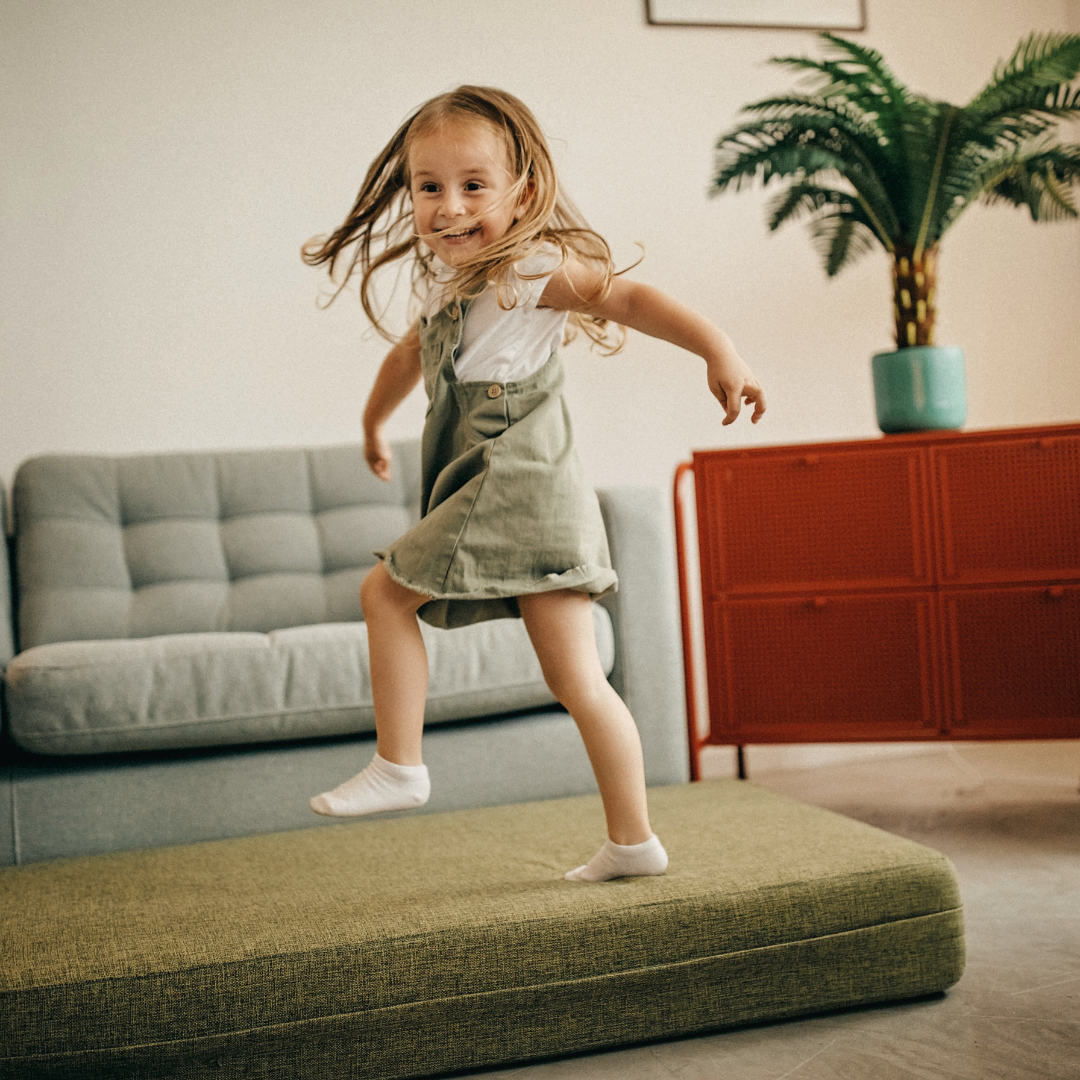
🛋️ Pillow Crashes & Couch Cushion Jumps
This is one that kids go absolutely wild for (and it's actually doing a ton of work on the sensory side!)
Gently toss your toddler onto the couch (they will ask for this on repeat, fair warning 😂)
Stack couch cushions on the floor and let them run and crash into them repeatedly (You can even count down out loud and “1, 2, 3, Go! Run… and CRASH!”)
Crab walk across the living room floor for a bonus proprioceptive boost
This kind of soft, full-body resistance is incredibly regulating and satisfying, especially for sensory-seeking kiddos or after a big emotional moment. The impact of crashing into something soft gives the nervous system exactly the feedback it's looking for.
Bonus tip: if your child seems to really crave proprioceptive input, get them a body sock and let them hang out inside it while they look at books, watch tv, etc.
Sensory System #2: Vestibular Input (Head Movement Through Space)
The vestibular system lives in your inner ear and processes head movement and balance. Whenever your child's head is moving through space (swinging, spinning, rolling, rocking), they're getting vestibular input.
This system helps toddlers build balance, coordination, and body awareness. And here's the cool part: vestibular input can either energize OR calm depending on how it's used. Slow, rhythmic movements tend to be calming, and fast, unpredictable movements tend to be alerting.
*OT Note: Always watch for signs of overstimulation (dizziness, crankiness) after any vestibular activity, and follow your child's cues. Keep sessions short to start.
Here are two easy vestibular input ideas you can do right at home:
🌀 Spinning & Rolling Games
Spin your child in a swivel chair (a desk chair works perfectly!)
Roll them up tightly in a blanket like a "burrito," then slowly unroll it
Help them lay over a yoga ball and gently rock it back and forth
These back-and-forth and circular movements help children regulate and calm down. Keep sessions short at first (30 to 60 seconds at a time), and always respect any requests to stop. Your child's body will tell you when it's had enough.
🛷 Pulling Along a Surface
This one is such a classic OT trick, and kids love it.
Have your child sit on a scooter board or inside an empty laundry basket, then roll up a scarf or towel so you each hold one end, and pull them slowly across the floor or down the hallway
Have them sit or lay belly-down on a large blanket and pull them down a long hallway
These types of linear (straight-line) movements promote nervous system regulation. Plus, because they combine movement plus resistance, they're a double-win for sensory support. A moving, laughing toddler being pulled in a laundry basket is also just really fun! 😄

When to Use These Activities (This Is the Key Part!)
Here's where it all comes together. The most powerful way to use sensory movement activities isn't just to pull them out when your toddler is already melting down. It's to build them proactively into your daily routine.
Try 5–10 minutes of any of these indoor movement activities 1–3 times per day, especially before high-demand moments like:
→ Getting dressed
→ Leaving the house
→ Sitting for meals
→ Transitioning to bedtime
Adding intentional movement into your daily routine can help ease transitions and reduce overall meltdowns, especially during those long cold months stuck indoors. Plus, let's be honest: they're also just really fun!
Your goal isn't to figure out how to entertain your child indoors all winter long. But having a few simple sensory movement ideas in your back pocket? That genuinely helps. And weaving them into your daily rhythm means you're proactively meeting your child's sensory needs before things escalate, rather than trying to manage the fallout after.
A Quick Recap: Your Indoor Sensory Movement Toolkit
Proprioceptive (Deep Pressure) Ideas:
Bear crawls, bunny hops, crab walks down the hallway
Pillow crashes and couch cushion jumps
Pushing a full laundry basket across the floor
Rolling up tightly in a blanket ("burrito roll")
Vestibular (Head Movement) Ideas:
Spinning in a swivel chair
Blanket pulls down the hallway
Yoga ball rocking
Laundry basket rides
When to use them: Before transitions, after big emotions, before meals, before bedtime — any time your child needs to regulate their body before a demand is placed on them.
Want Even More Ideas?
If you’re looking for some low-cost, OT-approved sensory toys and activities to keep on hand, click HERE to shop my Sensory Amazon Storefront.
If you want a ready-to-use list of simple, screen-free indoor sensory movement activities, grab my FREE Indoor Sensory Play Ideas Checklist HERE! It's packed with OT-approved indoor movement ideas that are easy, effective, and fun — perfect for toddlers and preschoolers.
And if you're looking for even more support navigating the toddler years with confidence, come join us inside The Rooted Crew — your one-stop shop for evidence-based, practical parenting guidance for ages 0–5.
We can all make it through together! 💛
Have questions or a favorite indoor movement idea of your own? Drop it in the comments below — I'd love to hear what works for your family!