
If you tried potty training before, and your toddler just peed on the floor all day long (or even worse, immediately started screaming every time you said the word potty, keep reading.
I’ve worked with hundreds of families in this exact situation before, and if you just decided to quit and go back to diapers, that makes a lot of sense. And now, you’re probably second-guessing the whole thing ever since 😅
I want you to hear this from me, a pediatric OT who specializes in potty training: this first attempt was not a failure.
You tried to embark on a big new transition with the information you had at the time, and now you know a whole lot more about your child. That's exactly what’s going to help you when you dive in again!
Before I get into the nitty-gritty, here’s a brief overview of what I recommend in your situation: take a few weeks off (usually 2 to 4) from potty training with zero pressure. This means that yes, you will likely be going back to full-time diapers or pull-ups. Use that break to figure out what got in the way, keep a daily low-pressure potty-sit going if your child is open to it, and get yourself ready to be consistent again. Then pick a new start date and go in with a real plan next time!
Now, let’s get into some frequently-asked questions about failed potty training attempts:
Is it normal for potty training to not work the first time?
Yes, it's very common. Plenty of the parents who come to me are on their second or third try, and their kids go on to do great. A first attempt that didn't stick usually comes down to timing or the method you used, and both of those are things you can change.
It also helps to zoom out on the timeline. According to Cincinnati Children's, most children are able to control their bowel and bladder at about 24 to 30 months old, and most have full daytime control by age 3 or 4. That's a big window! So if you’re worried that your child is “behind”, remember that taking a few weeks (or even months) off is really not a big deal in the grand scheme of things.
Why didn't potty training work the first time?
Before you try again, take a minute to name what exactly was going wrong and why you think that is.
Here are the reasons I see most often with the families I work with:
The method wasn't a good fit. Programs that promise a diaper-free toddler in 3 days leave a lot of parents feeling like they did something wrong when you’re still having some accidents on day 4. (I break this down in why the 3-day potty training method is a myth.) So maybe your child was actually doing how we would expect… your expectations were just too high!
Your child wasn't showing enough readiness signs yet. Some kids need a few more months of development before the skill clicks. Here's how to know if your toddler is ready for potty training.
There wasn't much prep beforehand. If the first time your child sat on a potty was the first day of potty training, that's a really big jump. Children don't like surprises!
Pushback turned into a power struggle. Reminders every 10 minutes and big reactions to every accident can make a toddler dig in hard. If your child started refusing to sit, this post on potty training refusal will help.
You went back and forth between underwear and pull-ups often. While some daycares do require pull-up use and there’s no way around that, flipping back and forth between undies and pull-ups “just in case” sends a mixed signal to your toddler’s brain and potty.
Poop got scary. One hard or painful poop can lead to holding it in, and withholding can stall everything else. Here's what to do when your child withholds their poop.
Life got busy. Maybe you were traveling a lot, or moving to a new home, or starting a new school right around the same time. If your toddler had too many things going on at once while also trying to learn this brand new skill, it makes sense that they would struggle to focus on it.
Most families find that one or two of these fit. Write yours down, because your new plan should proactively address each one!
How long should you wait before trying potty training again?
For most families, a few weeks is enough, though even longer is fine too.I usually suggest a minimum of 2 to 4 weeks with no pressure at all. Many pediatric associations and children’s hospitals give similar official recommendations.
If your child became afraid of the potty or started holding their poop for more than 2-3 days in a row, more than once, give it even longer and focus on rebuilding comfort before you set a new date. And if you're seeing pain with pooping, hard stools, or multiple small poops per day without ever a good-sized bowel movement, check in with your pediatrician before you start again, as these are signs that there may be some stool back-up in your child’s colon.

What to do during your potty training break
During the break, the potty can stay out and available, but any pressure to actually use it goes away. Here's what I recommend:
Offer one no-pressure potty-sit each day. Pick a predictable routine, like right after waking up or before bath, and suggest they sit on the potty: “You can sit on the potty before your bath and see if any pee comes out.” If they don’t want to, don’t force it. You can also have them try sitting with their clothes on if that’s more comfortable for now.
Change diapers in the bathroom. This helps your child connect pee and poop with that room.
Let them watch you go to the toilet. Narrate the steps simply: "I'm pulling down my pants, sitting on the potty, and letting my pee out. Now I’m wiping, flushing and washing my hands!” Keep it super neutral and matter-of-fact.
Use neutral words about poop. "Everybody poops! Great job letting the poop out of your body.” Don’t use words like yucky, stinky, dirty, or gross when talking about poop.
Read some new potty books together. Seeing a character go through it makes the whole idea feel more familiar. Simply read these neutrally, instead of talking about how they have to learn to use the potty soon.
Get YOURSELF ready, too!
This is the piece most parents skip. When you dive in again, you need to feel ready to commit and be consistent. Toddlers don't like inconsistency, and that's especially true if the potty expectations changed a lot the first time around.
Before your new start date, decide on these four things:
The specific words and phrases you'll use every time ("Pee and poop go in the potty.")
How you'll respond to accidents, so you're not deciding in the moment
Who else needs to be on the same page, like your partner, grandparents, a nanny or daycare
Which 3 or 4 days you'll spend mostly at home when you start
How to start potty training again: 6 steps
Look honestly at what happened last time. Was it accidents, refusing to sit, poop or a schedule that got too hectic? Your plan should include a specific answer for each thing that went wrong.
Check for readiness signs again. Look for discomfort with a wet or full diaper, hiding to pee or poop, interest in the bathroom and following simple directions. Your child doesn't need every single sign, but a few are good to have.
Pick a start date and stick with it. Once you decide to remove daytime diapers again, keep them off. Switching back and forth between diapers and underwear is confusing for a toddler. (P.S. Naps and nighttime can stay in a pull-up for now, since nighttime dryness develops separately and often much later.)
Build potty-sits into your daily routine. Tie potty trips to moments that already happen every day: after waking up, before leaving the house, before nap, before bath and before bed. Say "It's potty time!" instead of asking "Do you need to go?" Toddlers almost always say no to that question!
Help your child relax on the potty. Some kids sit and sit and nothing comes out. Blowing bubbles, singing a song, reading a book or running the sink can help. Here are more ideas for helping your toddler release their pee on the potty.
Plan for accidents before they happen. They will likely happen, and that's normal! Keep your response calm and matter-of-fact: "Uh oh, pee goes in the potty. Let's go finish there." Accidents can keep showing up for weeks, so give it 4 to 6 weeks of consistency before you decide whether it's working. Read more in the truth about potty training accidents.
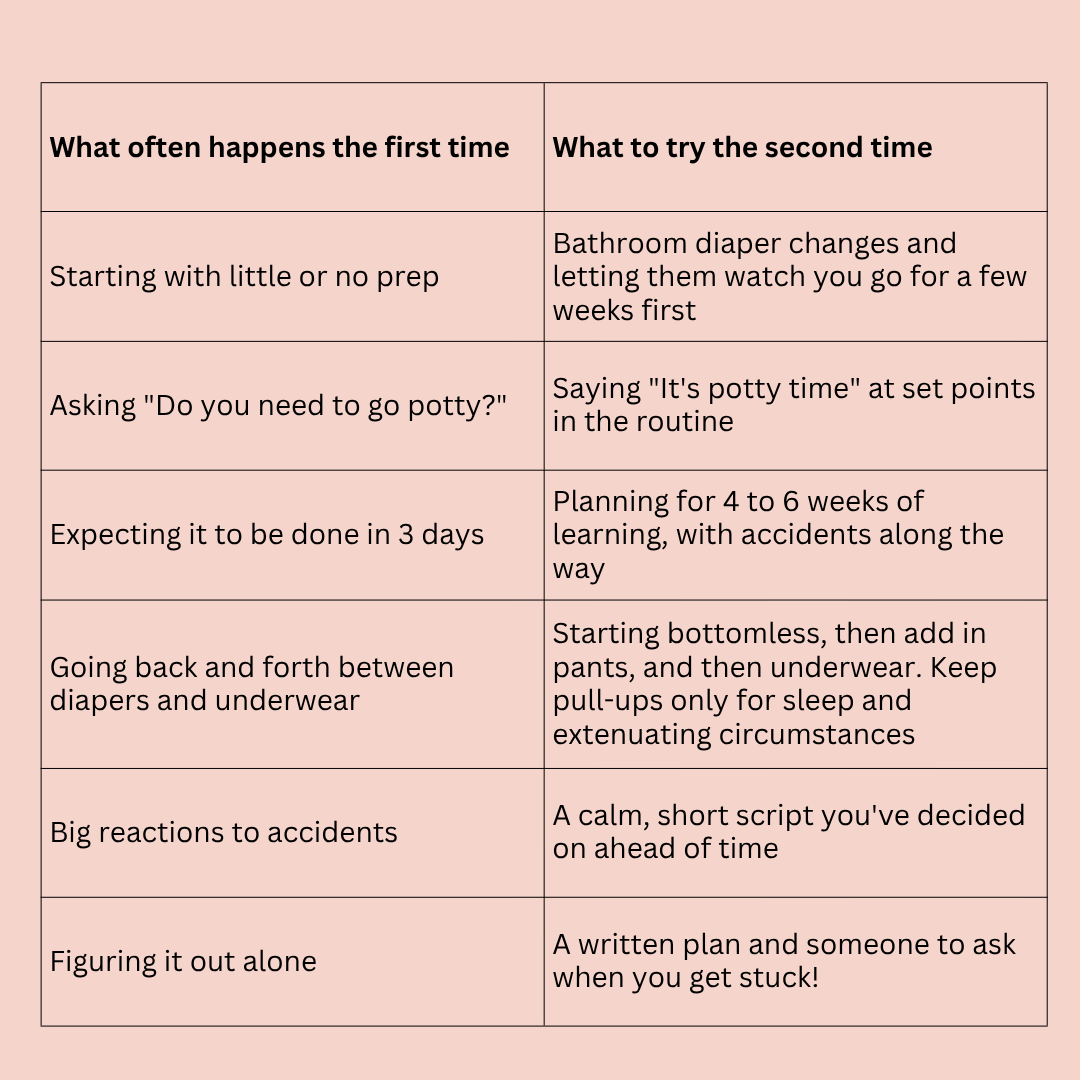
First try vs. second try: what to change
Frequently asked questions
Is it bad to stop potty training and go back to diapers?
No. A short, planned break is much better than pushing through a power struggle. Once you restart, keep daytime diapers off so your child gets a consistent message.
How long should I wait before trying potty training again?
Most families do well with a few weeks off, usually 2 to 4. If your child became afraid of the potty or started withholding poop, wait longer and work on comfort and neutrality first.
What if my toddler refuses the potty the second time?
Lower the pressure and offer small choices, like which book to bring or whether to hop or tiptoe to the bathroom. Keep it consistent and matter-of-fact.
Should I use a different potty training method the second time?
If the first method felt rushed or rigid for your family, yes. A routine-based approach that gives your child time to learn tends to work better for kids who struggled the first time.
Is my child too old to start potty training again?
Most children have daytime control by age 3 or 4. If your child is getting close to 4 and still isn't making progress, or if there's pain or withholding, talk with your pediatrician and consider getting extra support.
Tell me in the comments: what made the first round hard for your family? 👇
If you're getting ready to try again, the most important pieces are a new plan and support while you go through it. That's exactly what The Rooted Potty Method gives you. I walk you through every step, starting with prep, and help you troubleshoot whatever comes up once the diapers are gone, so you're not guessing this time. Click HERE to learn more and get support!